
India-EU FTA 2026: Impact on Indian Businesses & Exports
31 Jan 2026 6 mins Personal Finance
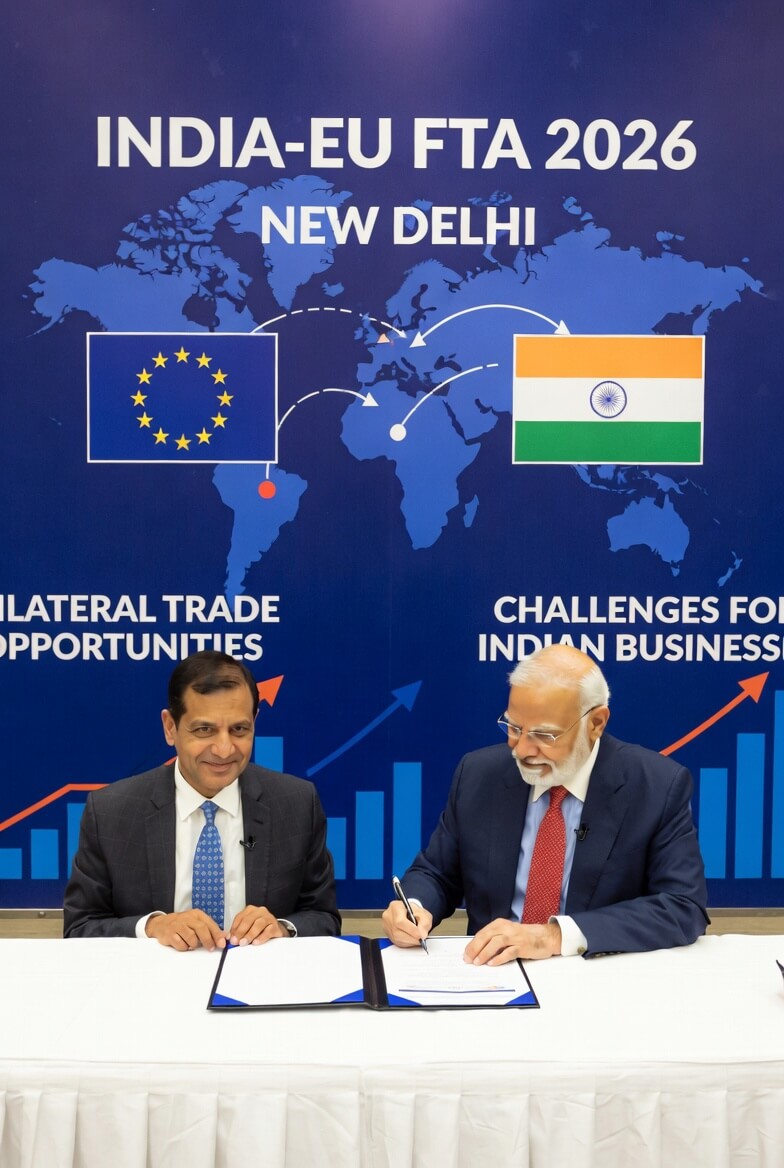
The India EU FTA, signed on January 27, 2026, in New Delhi, is being hailed as the "mother of all trade deals." This historic India EU trade agreement creates a massive free trade zone covering nearly 2 billion people and about 25% of global GDP, unlocking unprecedented opportunities for bilateral trade. With negotiations spanning almost two decades, the deal eliminates or reduces tariffs on over 90% of goods traded between India and the European Union, promising to boost exports, create jobs, and reshape supply chains. But what does the India EU trade deal mean for Indian businesses? In this blog, we'll explore the pros, cons, and sector-specific impacts to help you understand how this agreement could affect your operations or investments.
What Is the India EU Free Trade Agreement?
The India EU FTA, officially concluded after 14 rounds of talks relaunched in 2022, aims to double EU exports to India by 2032 while providing Indian businesses with preferential access to one of the world's largest markets. Key highlights include:
Tariff Reductions: India will slash duties on 96.6% of EU goods, while the EU will liberalize 99.5% of Indian exports over seven years.
Market Access: Covers goods, services, investment, and intellectual property, with a focus on sustainable trade and digital cooperation.
Implementation Timeline: Expected to take effect in 2026 or 2027 after legal scrutiny and ratification by parliaments.
Economic Scale: Bilateral trade, currently at $136 billion, could surge by 41-65%, adding billions in value for Indian exporters.
This India EU trade agreement comes amid global trade tensions, including U.S. tariffs, positioning it as a strategic pivot for Indian businesses seeking diversification.
Positive Impacts of the India EU Trade Deal on Indian Businesses
The India EU FTA offers significant benefits for Indian businesses, particularly those in export-oriented sectors. Here's how it could drive growth:
Export Boost and Job Creation: Labor-intensive industries stand to gain zero-duty access to the EU market, potentially creating 6-8 million jobs in India. The deal could unlock $75 billion in additional exports, enhancing competitiveness and supporting MSMEs through dedicated chapters on small businesses.
Cost Savings and Market Expansion: Indian firms will save on tariffs, making products more affordable in Europe. This is a game-changer for high-growth sectors, fostering innovation and attracting FDI (the EU already accounts for 16% of India's foreign investments).
Services and Mobility Gains: Enhanced access for IT, financial, and maritime services, plus easier mobility for professionals and students, could deepen India's service exports, valued at $83 billion in 2024.
Strategic Resilience: Amid U.S. tariff hikes, the deal provides a buffer, helping Indian businesses build resilient supply chains and reduce dependency on volatile markets.
Overall, the India EU free trade agreement aligns with India's Viksit Bharat 2047 vision, promoting sustainable growth and global integration.
Potential Downsides: Cons of the India EU FTA for Indian Businesses
While the benefits are substantial, the India EU trade deal isn't without challenges. Critics highlight risks that could impact domestic industries:
Import Surge and Competition: Eliminating tariffs on EU goods like automobiles (from 110% to 10%), machinery, and chemicals could flood Indian markets with cheaper imports, leading to deindustrialization and job losses in MSMEs. Auto stocks like Maruti Suzuki and Mahindra & Mahindra already dipped 1.5-4.2% on the announcement.
Agricultural Vulnerabilities: Farmers' groups like SKM warn of "economic warfare" from subsidized EU imports in dairy, olive oil, and processed foods, potentially crashing domestic prices and affecting smallholders.
IP and Regulatory Hurdles: Stricter intellectual property rules could hinder India's generic pharma industry, raising healthcare costs and limiting seed-saving rights for farmers.
Carbon Border Adjustment Mechanism (CBAM): No exemptions from the EU's carbon tax, which may increase costs for carbon-intensive Indian exports like steel and aluminum.
Asymmetric Benefits: Some argue the deal favors the EU more, with India's services exports growing by 50% versus the EU's doubling, potentially contracting India's trade with other regions by 3%.
These cons underscore the need for Indian businesses to adapt through upskilling and compliance investments.
Sector-Wise Impact of the India EU Trade Deal on Indian Businesses
To provide a clearer picture, here's a breakdown of how the India EU FTA affects key sectors:
Sector | Pros | Cons |
|---|---|---|
Textiles & Apparel | Zero tariffs on exports (previously 12%), boosting $75 billion market access and creating millions of jobs. | Increased competition from EU imports, though minimal due to low EU tariffs. |
Automobiles | Opportunities for component exports; high-tech EU imports could spur innovation. | Sharp duty cuts make EU cars cheaper, pressuring local manufacturers like Tata Motors. |
Pharmaceuticals & Chemicals | Reduced EU tariffs (from 12.8%) enhance generics exports; IP protection attracts R&D investments. | Stricter data exclusivity may raise drug costs and limit generic production. |
Agriculture & Dairy | Preferential access for select products like marine goods (tariffs from 26% to 0%). | Flood of subsidized EU imports could depress prices for farmers. |
IT & Services | Easier professional mobility and market access could grow exports by 50%. | Limited immediate gains due to existing low barriers. |
Gems, Jewellery & Leather | Duty-free entry (from 4-17%), supporting MSMEs and handicrafts. | Potential oversupply risks if EU demand fluctuates. |
This table illustrates the balanced yet transformative potential of the India EU trade agreement for Indian businesses.
Conclusion: Navigating the India EU FTA for Business Success
The India EU FTA 2026 represents a pivotal opportunity for Indian businesses to expand globally, but it demands strategic preparation to mitigate risks. By leveraging pros like export growth and job creation while addressing cons such as import competition and regulatory changes, companies can thrive in this new era. Whether you're an exporter eyeing the EU market or a domestic firm adapting to competition, staying informed is key. For more insights on the impact of India EU trade deal on Indian businesses, follow our blog for updates.
Find the Best Mutual Funds for your every investment goal. Explore top mutual funds and start your SIP Today!
Find the Best Credit Card for your spending habits. Explore top credit cards and maximize your rewards.
Get a Personal Loan that fits your needs. Apply for loans from Rs 1000 to Rs 15 Lakhs with competitive rates.
Author - Abhishek Sonawane
Abhishek Sonawane, an MBA graduate from the prestigious Indian Institute of Management Visakhapatnam (IIMV), brings over ten years of experience in the finance domain. His extensive background includes various roles in financial management and strategy, providing him with a comprehensive understanding of the financial landscape. Abhishek’s expertise and dedication to financial education make him an authoritative voice in personal finance, helping readers make informed financial decisions.