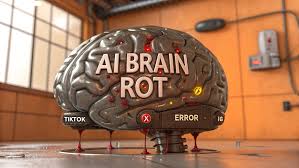
AI Brain Rot: The Hidden Danger of Junk Content
Generative AI, such as ChatGPT, has made significant strides in various fields including education, finance, and healthcare. However, a new study from Cornell University sheds light on a troubling phenomenon known as "brain rot" that affects these AI models. This term refers to the cognitive decline seen in AI when exposed to low-quality online content.
The study revealed that AI models, like Llama 3 and Qwen 2.5, can suffer similar cognitive issues as humans when they are inundated with junk information. Researchers experimented by exposing these models to meaningless online texts and found that their performance dropped dramatically. For instance, accuracy fell from 74.9% to 57.2%, indicating a serious decline in their ability to comprehend and analyze information.
In the context of India, where social media and online content can often be saturated with misinformation and clickbait, this finding is particularly relevant. The rapid spread of low-quality content can not only mislead human users but also impair the functioning of AI tools that are increasingly being used in various sectors.
The study identified two main types of junk content on social media platforms like X: highly viral posts and clickbait articles with misleading claims. These types of content were shown to induce lasting cognitive decline in AI models, leading to a phenomenon called "thought skipping," where the models fail to engage in complete reasoning processes.
Furthermore, the implications of this research are significant for developers and businesses relying on AI. As these models become less reliable due to exposure to poor data, the quality of their outputs can be compromised. In India’s rapidly digitalizing landscape, ensuring that AI models are trained on high-quality content is crucial.
The researchers also suggested that periodic evaluations of AI models should be conducted to monitor for signs of cognitive decline. This involves three steps: routine assessments, ensuring quality data during the training phase, and analyzing the impact of viral content on learning patterns. Such measures could help mitigate the risks associated with AI models developing "brain rot."
In conclusion, as we embrace AI technologies in India, it is essential to be aware of the content quality that feeds these systems. By prioritizing high-quality information, we can enhance the effectiveness and reliability of AI tools that are becoming integral to our daily lives.