Crisis in Indian Public Universities
The Indian public university system is in a state of crisis, with political interference and administrative decay seriously undermining its integrity. Over the years, these institutions have faced long-term structural pressures, leading to a gradual decline in their quality and relevance. The situation has worsened, particularly since the 1970s, when the foundations of this crisis were first laid. Recent events, such as the removal of vice-chancellors in Rajasthan due to ABVP protests, highlight the growing influence of political parties in university governance.
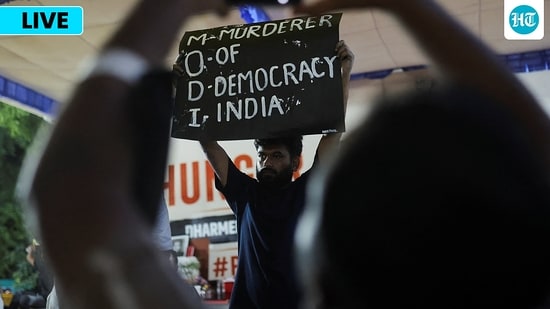
Once characterized by vibrant academic discourse, public universities now find themselves shackled by a culture of fear. Faculty members report that the ABVP has gained unprecedented control, effectively pre-censoring speakers and stifling dissent. This trend raises significant questions about the role of student unions and their affiliations with political parties. While political engagement is vital for students, the current state of affairs suggests that party politics may be damaging the academic environment.
The politicization of both student and teacher unions has led to the erosion of the concept of the “student” in public consciousness. Unions that should focus on the long-term interests of students often become extensions of political parties, compromising the quality of education. This situation is particularly alarming as it reflects a broader trend of declining academic standards across the nation.
Institutions like Delhi University and JNU, once seen as bastions of free thought, are now under the heavy hand of political control. Faculty members describe a dystopian reality where academic freedom is curtailed, and the quality of education is diminishing. Students face pressure to conform to political ideologies, with even the basic norms of university governance being disregarded.
As the public university system grapples with these challenges, it is imperative to reflect on its future. The absence of collective voices from students and professors advocating for academic excellence leaves these institutions vulnerable to external pressures. The tragic irony is that the very groups that should champion the cause of education are often reduced to mere political pawns.
The current state of Indian public universities is a stark reminder of the need for a revival of academic integrity and autonomy. Only through a commitment to educational ideals and a rejection of partisan politics can these institutions reclaim their purpose. As we witness the transformation of universities into political arenas, it is crucial for stakeholders to unite and advocate for a return to the values that define higher education.