Dow Jones Hits 50,000: Trump Credits Tariffs
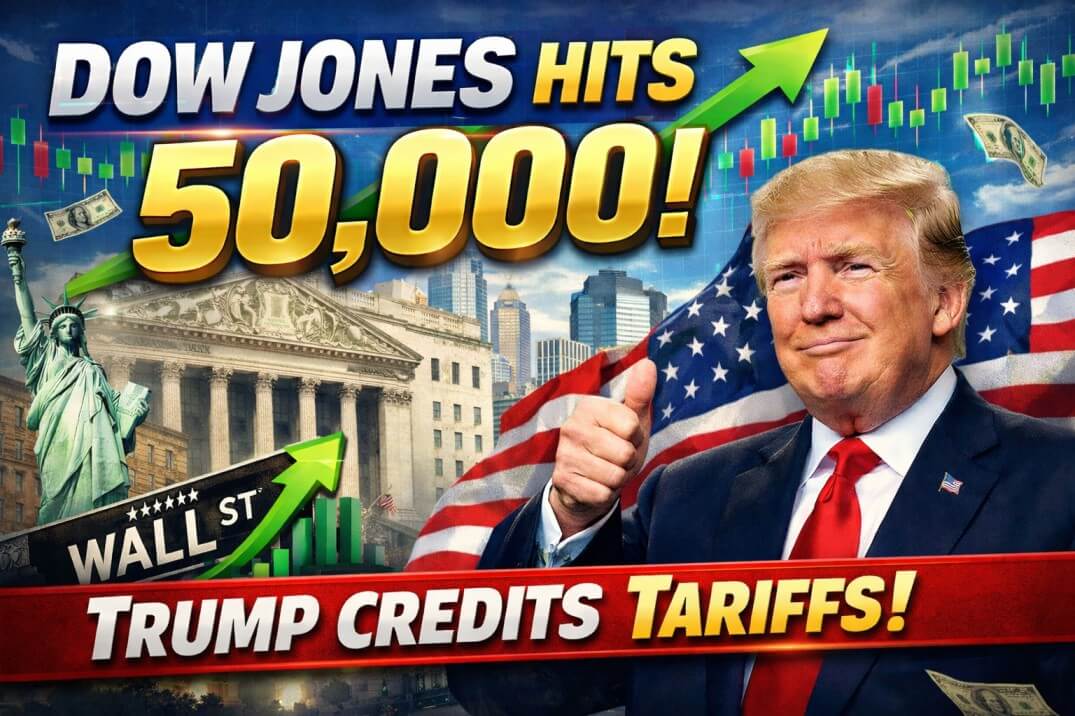
In a remarkable achievement, the Dow Jones Industrial Average hit the landmark of 50,000 for the first time, igniting a wave of enthusiasm from US President Donald Trump. This historic milestone comes as the stock market experiences a significant rally, particularly in technology stocks, recovering losses from previous weeks.
Trump expressed his excitement on social media, attributing the surge to the tariffs he has imposed on foreign nations. He claimed that his administration's economic policies have played a pivotal role in driving the stock market's performance. “The ‘Experts’ said I would reach 50,000 by the end of my term, but I did it today, three years ahead of schedule,” he boasted.
The market rally was notable, with the Dow Jones soaring over 1,200 points, marking a 2.5% increase. This was the best performance the US markets have seen since May of the previous year, largely fueled by gains in chipmaking companies. Major players like Nvidia and Broadcom contributed significantly to the upward trend, showcasing investor confidence in the technology sector.
Trump's confidence in the market's future is abundantly clear as he boldly predicts that the Dow could reach 100,000 before his term concludes. He emphasized that his policies are not just about short-term gains but a long-term vision for the US economy. “Remember, Trump was right about everything!” he exclaimed, urging supporters to keep this in mind for upcoming elections.
Despite the recent successes, the stock market had faced challenges earlier in the week, particularly with the Nasdaq index experiencing declines. However, the current surge represents a renewed optimism among investors, particularly in technology and AI sectors. Major companies like Amazon and Google are ramping up their investments in AI technologies, further driving market expectations.
The Dow's impressive rise to 50,000 is not just a number; it symbolizes the underlying economic dynamics and investor sentiment. As India watches closely, the implications of such movements in the global market could resonate back home, influencing investment strategies and economic policies. The excitement in the US markets serves as a reminder of the interconnectedness of the global economy.