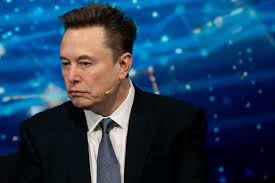
Elon Musk's Vision: Work May Become Optional
Elon Musk, the CEO of Tesla and SpaceX, has made a fascinating prediction about the future of work during a podcast with Indian entrepreneur Nikhil Kamath. He suggests that within the next 10 to 20 years, working could become optional, much like a hobby. This bold statement is largely based on advancements in artificial intelligence (AI) and robotics.
According to Musk, the rapid development of AI and robotics will lead to a scenario where these technologies can perform tasks that humans currently do. He likens this shift to the way we choose to grow our own vegetables or buy them from a store. As AI continues to evolve, it may reach a point where it runs out of tasks that are necessary for human happiness, effectively making traditional work superfluous.
Musk elaborated on this by stating that there will be a time when AI will saturate all conceivable tasks for humans, leading to a situation where AI and robotics are primarily focused on self-directed activities. He believes that this transformative change could occur sooner rather than later, possibly even within the next decade.
Moreover, Musk anticipates that in a future dominated by AI and robotics, the concept of money may become irrelevant. He envisions a world depicted in positive AI futures where traditional currencies no longer hold value. While he acknowledges that power, electricity, and mass will still impose constraints, he argues that the nature of currency could fundamentally shift.
This prediction raises essential questions about the future of work and society. If work becomes optional, how will individuals find purpose and fulfillment? What will be the implications for economic systems that rely on traditional employment? As we move toward this potential future, it's crucial to engage in discussions about the role of technology in our lives and how it can reshape societal norms.
In conclusion, Elon Musk’s insights challenge us to rethink our perceptions of work and its role in our lives. As AI and robotics continue to advance, society may need to adapt to new realities that redefine our understanding of productivity and fulfillment.