India-EU FTA: A Stand Against Economic Coercion
The recent India-European Union (EU) free trade agreement has emerged as a significant milestone, particularly highlighted by Canada’s Minister of Energy and Natural Resources, Tim Hodgson. He remarked that this deal is a “perfect example” of rejecting the coercive tactics often employed by global powers that use tariffs as leverage. Although Hodgson did not explicitly name the US, his comments seemed to address the controversial trade practices associated with former President Donald Trump.
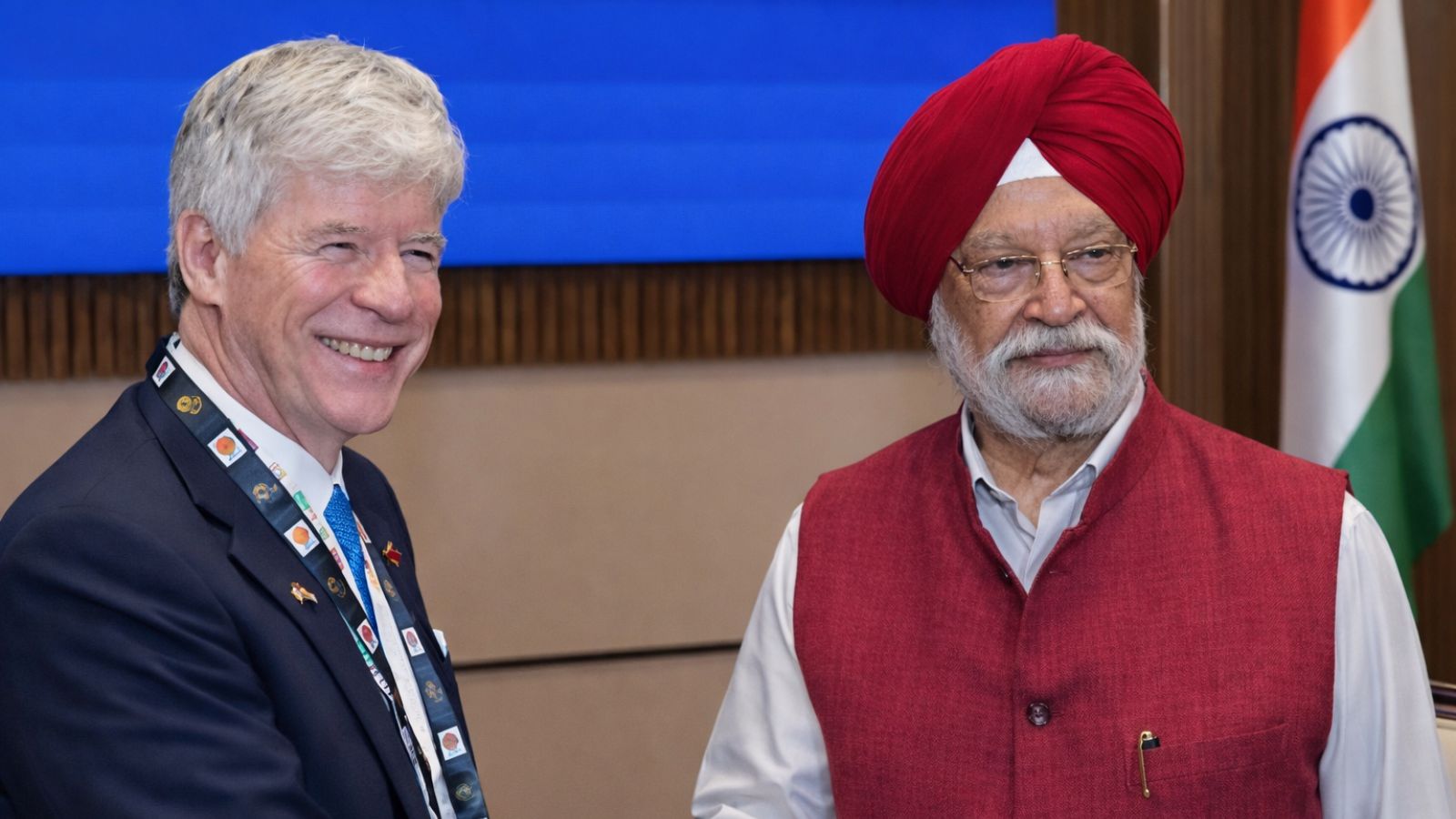
Hodgson's statements came during a bilateral meeting with India’s Petroleum Minister, Hardeep Singh Puri, where both leaders discussed deepening their energy trade ties. Canada is keen to enhance its energy export relationships with India, which is one of the largest consumers of crude oil and liquefied natural gas (LNG) globally. With Canada looking to diversify its energy export markets, India is becoming increasingly important as a potential buyer of Canadian oil and gas.
During the discussions, Hodgson emphasized the importance of building multilateral relationships in response to the evolving global trade scenario. He criticized the US's approach to international trade, describing it as a “rupture” in the global trading system, which traditionally relied on multilateral agreements and free trade principles. The minister underscored that the world should not be dominated by economic coercion, stating, “We’re not going to live in a world where the strongest puts tariffs on everyone else.”
Hodgson pointed out that Canada used to depend heavily on the US as a primary market for its energy exports, providing 98% of its energy to just one customer. However, recent shifts in the political landscape have prompted Canada to reconsider this reliance. He stressed that India, with its growing energy demands, presents a valuable opportunity for Canada to diversify its energy supply chains.
The joint statement released after the meeting highlighted the commitment to deepen bilateral energy trade, including the supply of Canadian LNG, liquefied petroleum gas (LPG), and crude oil to India. The discussions also touched upon potential collaborations in renewable energy, critical minerals, and clean technologies, indicating a strong future partnership between the two nations.
As the global landscape continues to change, India's proactive approach to establishing robust trade agreements stands out. The India-EU FTA not only reinforces India's position in global trade but also signals a commitment to a more balanced and equitable trading environment, making it a key player in the energy sector.