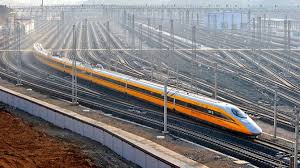
Mumbai-Ahmedabad Bullet Train: A Future of Connectivity
The Mumbai-Ahmedabad bullet train project is generating a lot of discussions, especially regarding its progress and potential impact on travel in India. Despite facing delays, Masafumi Shukuri, the chairman of the Japan Transport and Tourism Research Institute, expresses confidence that all bullet train projects worldwide have ultimately been completed successfully. He believes that the Mumbai-Ahmedabad corridor can be a game-changer for the nation.
Shukuri highlights the importance of high-speed rail systems, stating that while the costs are higher compared to conventional railways, the benefits far outweigh these expenses. He emphasizes that high-speed rail can significantly enhance societal and economic conditions by connecting people and cities more efficiently. The distance between Mumbai and Ahmedabad is similar to that of Tokyo and Osaka, making it conducive for such a project.
One key point raised is the comparison between the Mumbai-Ahmedabad corridor and Japan's Shinkansen. Shukuri notes that when the Shinkansen was introduced, Tokyo and Osaka had lower populations than the current dynamics between Mumbai and Ahmedabad. The presence of larger cities like Surat along the route further supports the feasibility of the project.
Shukuri also addresses concerns about the project not passing through a capital city. He reassures that the value of high-speed rail is not defined by its route but rather by its ability to drive economic growth and connectivity. He anticipates that once the Mumbai-Ahmedabad line becomes operational, it will lead to the development of more high-speed rail corridors across India, including a potential link between Delhi and other major cities.
The discussion also highlights the advantages of bullet trains over air travel. Shukuri points out that the carrying capacity of Shinkansen trains surpasses that of domestic flights, making them a practical choice for daily commuters. Additionally, the convenience of train stations located in city centers offers a significant advantage over airports, where travel time can be extended due to check-in and security procedures.
Safety and punctuality are paramount, with the Shinkansen boasting an impressive record of zero fatalities since its inception. Shukuri emphasizes that this success comes from a well-integrated system that combines hardware, software, and rigorous training. As part of the Mumbai-Ahmedabad project, many Indians are being trained in Japan to ensure the same standards are maintained.
In conclusion, while there are challenges and delays, Shukuri remains optimistic about the Mumbai-Ahmedabad bullet train project. He believes that once it is completed, it will be embraced by the public and will revolutionize travel in India, much like it has in Japan.