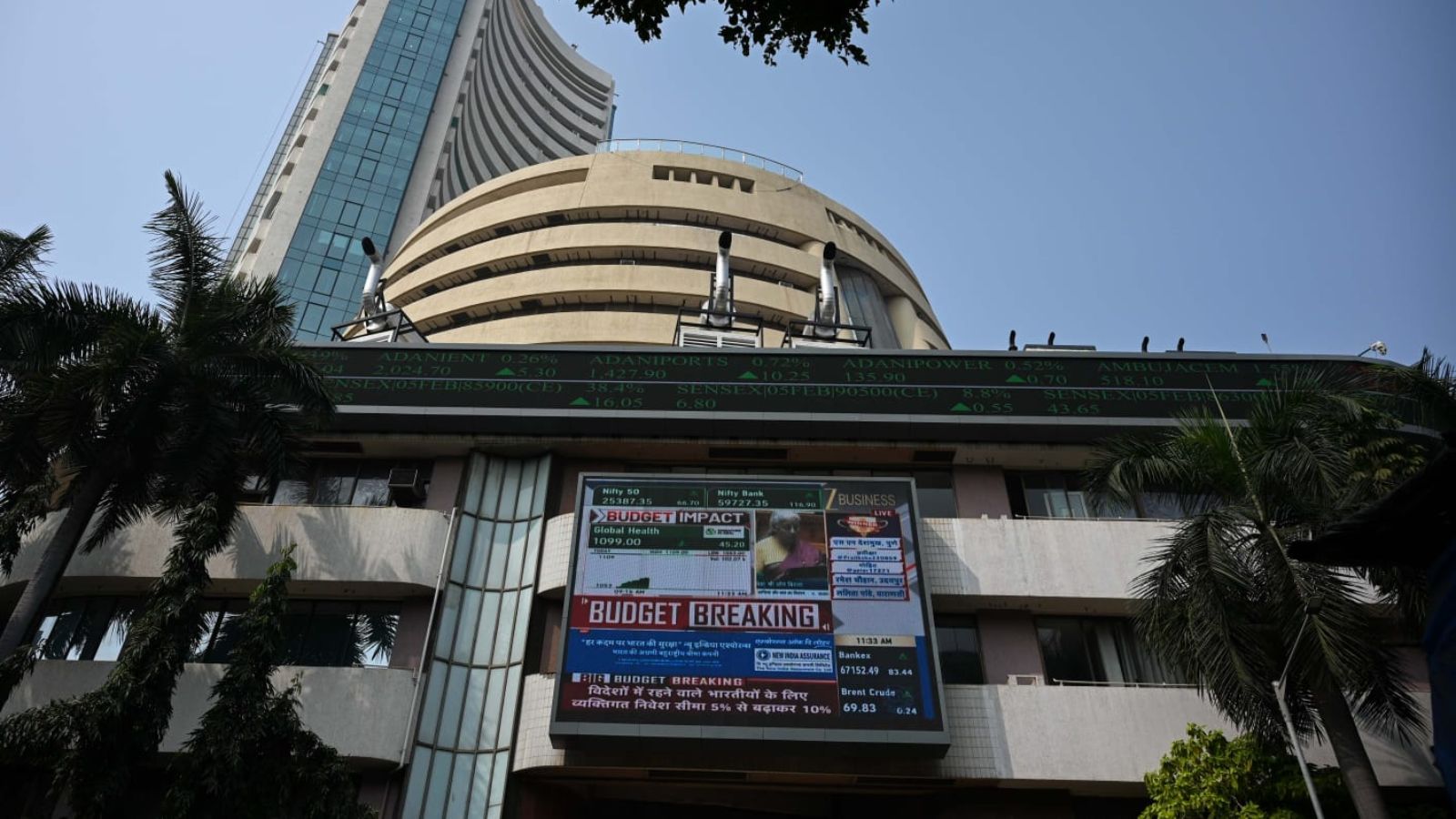
Sensex Drops 1.9% After Budget 2026 Announcement
The Indian stock market experienced a notable decline of 1.9% following the presentation of Budget 2026-27 by Finance Minister Nirmala Sitharaman. The proposed increase in the Securities Transaction Tax (STT) for futures and options trading stirred significant concerns among investors. The BSE Sensex, a key benchmark index, fell to 80,722.94 points, marking its second-largest drop on Budget day since 2014.
On the day of the announcement, the Sensex initially showed promise, fluctuating positively. However, it quickly reversed its gains, plunging sharply by 2,370.36 points, or 2.88%, during the afternoon session, ultimately settling lower. The 50-stock Nifty index also faced a similar fate, dropping by 495.20 points or 1.96%.
Analysts highlighted that while the STT hike on derivatives triggered immediate sell-off, the Budget contained elements aimed at supporting long-term growth. The government proposed a fiscal deficit target of 4.3% of GDP and increased capital expenditure to ₹12.2 lakh crore, signaling a commitment to infrastructure development.
Moreover, sectors like manufacturing, biopharma, semiconductors, and textiles received enhanced incentives, aimed at stimulating economic activity in the coming years. The government allocated ₹10,000 crore for these sectors and emphasized support for agriculture, defense, and clean energy initiatives.
Despite the adverse market reaction, some stocks performed well. Shares of Power Finance Corporation (PFC) and REC surged by up to 6% following the announcement of their restructuring as part of public sector financial institution strengthening. Positive projections for GDP growth, estimated between 6.8% to 7.2%, also provided a silver lining for the market's future outlook.
While the immediate focus was on the STT increase, experts believe that the structural reforms and sector-specific incentives could drive long-term equity upside. Investors are advised to remain cautious but optimistic about the potential growth in infrastructure and renewable energy sectors.
In summary, the initial market reaction to the Budget has raised concerns, but the underlying growth proposals could pave the way for a stronger economy in the future, making it essential for investors to stay informed and adaptable to changing market dynamics.