
How AI Is Shaping Personal Finance in 2026: The Complete Guide to Investing, Budgeting, Banking & Wealth Management
05 Jun 2026 11 mins Personal Finance
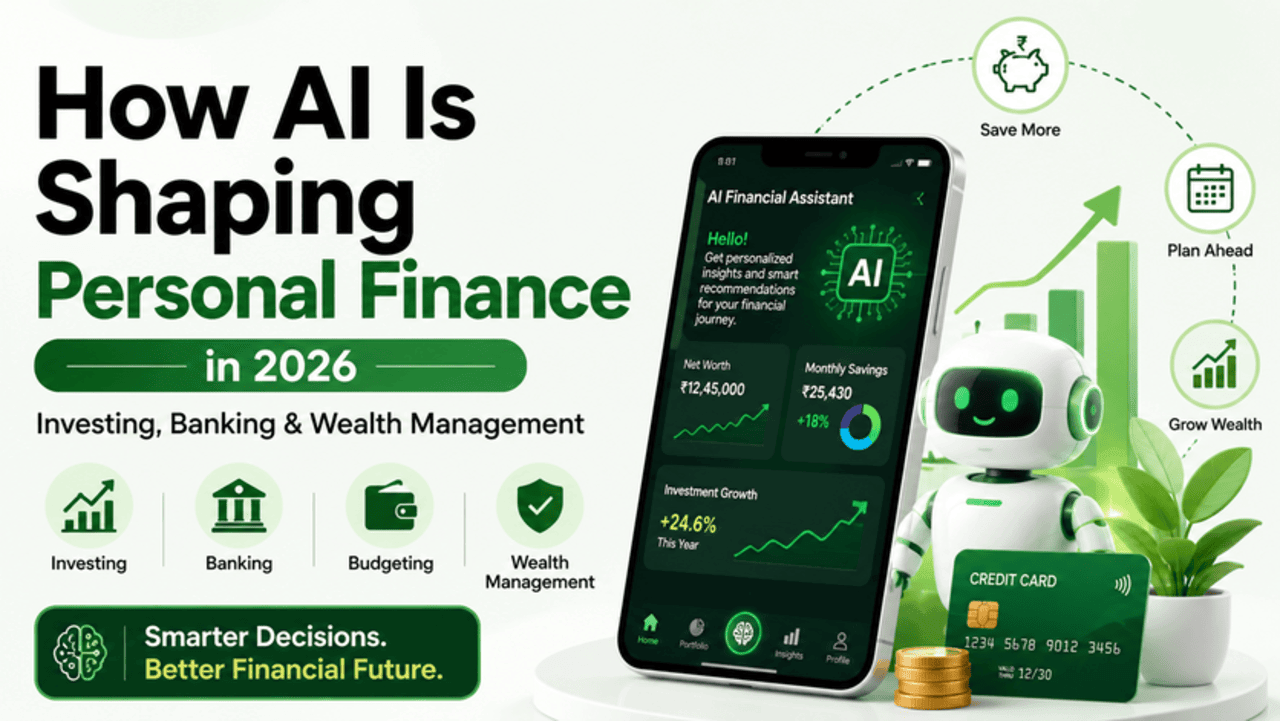
Managing money well is a common challenge for many, despite the wealth of information and tools available today. The sheer volume of financial advice, coupled with the complexity of products and emotional weight of money decisions, often leaves people feeling overwhelmed and stuck. In 2026, artificial intelligence (AI) has become a practical, accessible assistant that ordinary people can use to gain clarity, make smarter choices, and build lasting wealth. This guide will show you exactly how to use AI to transform your financial life—from saving and budgeting to investing and long-term planning—without needing a background in technology.
Whether you’re a salaried employee, freelancer, young professional, small business owner, or part of a family planning for the future, AI can help you cut through confusion and take control of your money. This isn’t about hype or complexity; it’s about how the right AI tools and approaches can support your financial goals with practical insight, discipline, and confidence.
By the end, you’ll understand:
How AI can help you organize and optimize your finances daily
How AI aids saving more and investing intelligently
How to avoid costly financial mistakes using AI guidance
Ways to improve your financial literacy with AI learning tools
How to build a personal AI-powered money management system tailored to you
Why Most People Struggle With Personal Finance?
Money challenges rarely come from a lack of income alone. Many face behavioral and structural hurdles:
Lifestyle inflation: As income grows, spending climbs proportionally, often unintentionally. AI can help here by monitoring your spending trends and alerting you when lifestyle upgrades risk eroding your savings goals.
Emotional spending: Stress, social pressures, or impulse can trigger unplanned purchases. AI budgeting tools that track your spending in real time can highlight emotional buys, helping you pause and rethink before your wallet opens.
Limited financial literacy: Many people find financial concepts confusing, leading to poor decisions. AI-powered educational assistants can explain terms and strategies in simple language, helping you build knowledge without overwhelm.
Decision overload: Daily money choices add up, causing fatigue and often leading to inaction or impulsiveness. AI’s ability to analyze your data and provide clear, prioritized recommendations lightens this mental load.
Poor habits: Neglecting budgets, skipping emergency funds, or mismanaging credit can have long-term consequences. AI tools help instill discipline through reminders, progress tracking, and automated adjustments to keep you on course.
Insight: The right AI approach begins with recognizing your unique challenges. Choose AI tools that not only track numbers but also educate and coach you to build better habits. Start small—use AI to identify one spending leak or automate a savings goal to build momentum.
Why AI Is Becoming a Personal Finance Assistant?
Think of AI not as a “financial guru” with all the answers but as a trusted assistant—a partner that helps you organize, analyze, and learn about your finances efficiently.
Assistant: AI tools automatically categorize expenses, track bills, and monitor your financial health without constant manual input from you.
Research Partner: Instead of spending hours comparing investment funds or insurance policies, AI can quickly present options tailored to your profile and goals.
Financial Educator: AI chatbots and conversational tools answer your questions, explain complex topics in plain English, and simulate scenarios so you can learn actively.
Right AI Approach: Use AI as a complement to your judgment, not a replacement. Combine AI insights with your values and goals. For example, if an AI tool flags high spending on dining out, reflect whether that aligns with your priorities before making changes.
How to Use AI to Understand Your Spending?
Understanding your spending patterns is fundamental to managing money well. AI-powered apps excel at breaking down your expenses with precision—something manual tracking often misses.
Expense Analysis: AI tools analyze your bank and credit card transactions, categorizing spending into areas like groceries, utilities, subscriptions, dining, and more. This helps you see exactly where your money goes over weeks or months.
Spending Leaks: AI can pinpoint small, recurring expenses that add up, such as unused subscriptions or fees. For instance, an AI tool might alert you that you’re paying for three streaming services but watch only one regularly.
Subscription Audit: Many people lose track of subscriptions. AI can generate a clear list of active subscriptions and suggest cancellations for those you rarely use.
Cash Flow Awareness: AI projections based on your income and spending patterns forecast when you might face tight cash flow, helping you plan accordingly.
Practical Example: Use an AI budgeting app that syncs with your accounts and review its spending reports weekly. When it flags a subscription or category with rising costs, decide if it fits your priorities or if reallocating that money to savings or debt repayment makes better sense.
How to Use AI to Create a Better Budget?
Budgeting is often seen as tedious, but AI can make it dynamic, intuitive, and motivating.
Budget Creation: AI examines your historical spending and helps you create a realistic budget that reflects your lifestyle and financial goals.
Budget Reviews: Instead of setting budgets once a year, AI encourages regular check-ins to adjust for changes—like a raise, a new expense, or a shift in goals.
Spending Optimization: AI can suggest how small changes—like reducing dining out or renegotiating bills—can free up money for saving or investing.
Monthly Financial Checkups: Automated monthly reviews help you stay accountable, celebrating wins and identifying course corrections early.
Right AI Approach: Choose budgeting tools that offer personalized advice rather than rigid categories. Pair AI’s suggestions with your financial priorities. For example, if family outings are important to you, don’t cut that completely; instead, find savings in less important areas.
How to Use ChatGPT to Improve Financial Literacy?
Financial literacy is the foundation of wise money management. Conversational AI like ChatGPT offers a unique way to learn without pressure.
Learning Mutual Funds: Ask ChatGPT to explain how mutual funds work, their benefits, and how to choose one.
Learning SIPs: Understand systematic investment plans, which help spread investments over time and reduce market timing risks.
Learning Insurance: Get clear explanations on types of insurance—health, life, disability—and why they matter.
Learning Retirement Planning: Explore retirement goals, how much to save, and different account types.
Practical Prompts:
“What is an emergency fund, and how much should I save?”
“Explain the difference between mutual funds and ETFs.”
“How do SIPs reduce investment risk?”
“What are the pros and cons of term life insurance?”
“How do I plan for retirement if I’m 30 years old?”
“What’s the best way to start investing with $100 a month?”
“How can I protect my family financially if I become disabled?”
“What’s the difference between traditional and Roth IRAs?”
“Explain credit scores and how to improve mine.”
“What is inflation, and how does it affect my savings?”
“How do I create a debt repayment plan?”
“What should I look for when comparing health insurance plans?”
“How can I use tax-advantaged accounts for college savings?”
“What are the risks of investing in stocks?”
“How do I balance paying off debt and investing?”
Insight: Use ChatGPT or similar AI conversational tools as your personal financial tutor. Ask follow-up questions, request examples, or even ask for a step-by-step plan tailored to your situation. This builds knowledge over time, empowering better decisions.
How AI Can Help You Become a Better Investor?
Investing can seem daunting, but AI tools provide a thoughtful, disciplined approach.
Learning Before Investing: AI platforms offer educational content tailored to your experience level, demystifying concepts like diversification, risk tolerance, and asset allocation.
Portfolio Review: AI can analyze your current investments to identify concentration risks, fees, and alignment with your goals.
Risk Understanding: AI tools assess your comfort with risk through questionnaires and simulate portfolio outcomes under different market conditions.
Asset Allocation: Based on your goals and risk profile, AI can suggest an appropriate mix of stocks, bonds, and other assets.
Long-Term Investing: AI encourages a long-term mindset, reminding you to avoid emotional, short-term reactions.
Right AI Approach: Avoid services promising stock tips or market timing. Instead, use AI to build a diversified portfolio aligned with your needs. For example, if your AI tool suggests you’re overexposed to a single sector, consider rebalancing gradually.
How Families Can Use AI for Financial Planning?
Managing family finances involves juggling multiple priorities—household expenses, education, insurance, and retirement.
Household Budgeting: AI apps can consolidate all incomes and expenses, offering clear visualizations of cash flow.
Child Education Planning: AI tools estimate future education costs and recommend monthly savings targets, factoring in inflation and investment growth.
Insurance Planning: AI can remind you of insurance renewal dates and suggest coverage adjustments as family needs evolve.
Retirement Planning: AI projections simulate retirement savings adequacy based on current contributions and lifespan assumptions.
Practical Example: Use an AI financial planner app that integrates these components. Set reminders for key milestones—like insurance reviews or education savings increases—to keep your family’s financial plan on track.
How Freelancers and Business Owners Can Use AI?
Irregular income poses unique challenges that AI can help manage effectively.
Irregular Income Management: AI forecasts cash flow by analyzing your income variability and expense patterns, helping you plan buffer months.
Cash Flow Planning: AI tools can prioritize bills and suggest optimal payment timings to avoid late fees and maintain credit health.
Tax Preparation Support: AI-based tax apps organize receipts, estimate quarterly taxes, and identify deductible expenses to reduce surprises.
Emergency Funds: AI calculators tailored for freelancers help define appropriate emergency fund targets based on income volatility.
Right AI Approach: Use AI tools designed specifically for irregular income earners. For example, a cash flow forecasting tool that smooths your income projections over months can prevent overspending in high-income periods.
The Biggest Financial Mistakes AI Can Help You Avoid
AI’s biggest value lies in preventing costly errors:
Overspending: Real-time alerts on spending limits help curb impulse buys.
Underinsurance: Reminders to review and update coverage prevent gaps.
Excessive Debt: AI flags rising credit card balances and suggests repayment plans.
Emotional Investing: AI discourages panic selling by showing historical market cycles.
Retirement Neglect: Automated savings nudges keep your retirement fund growing.
The Biggest Mistakes People Make While Using AI
To benefit fully, avoid these pitfalls:
Blind Trust: Always verify AI recommendations; it’s a tool, not an oracle.
Sharing Sensitive Info: Protect your data; use secure, reputable platforms.
Treating AI as Financial Advisor: For complex decisions, consult a human expert.
Following AI Investment Ideas Blindly: Use AI suggestions as input, not gospel.
When You Should Not Rely on AI
Certain areas require professional human expertise:
Estate Planning: Complex wills, trusts, and inheritance issues.
Tax Litigation: Disputes with tax authorities.
Complex Financial Planning: Unique or sophisticated situations.
Legal Matters: Contracts, disputes, or compliance issues.
A Step-by-Step 30-Day AI Money Management Plan
Week 1: Financial Audit
Use AI tools to analyze your spending, income, debts, and assets. Identify leaks and opportunities.
Week 2: Budget Creation
Set up an AI-driven budget aligned with your goals. Automate savings and track progress.
Week 3: Investment Review
Have AI evaluate your portfolio’s risk and diversification. Adjust based on recommendations.
Week 4: Long-Term Planning
Use AI to plan for retirement, insurance, and emergency funds. Schedule regular reviews.
The Future of AI and Personal Finance
AI will make financial tools smarter, more personalized, and accessible to everyone. Its strength lies in helping people become disciplined, informed, and intentional—no shortcuts, no gimmicks. The partnership between humans and AI will empower better decisions and healthier financial futures.
Conclusion
AI won't make you wealthy overnight. Its true power is in helping you become more organized, informed, and intentional with your money. The future of personal finance is not humans versus AI but humans using AI to make smarter, more confident financial decisions. With the right approach, AI becomes a trusted assistant on your journey to financial well-being.
Find the Best Mutual Funds for your every investment goal. Explore top mutual funds and start your SIP Today!
Find the Best Credit Card for your spending habits. Explore top credit cards and maximize your rewards.
Get a Personal Loan that fits your needs. Apply for loans from Rs 1000 to Rs 15 Lakhs with competitive rates.
Author - Abhishek Sonawane
Abhishek Sonawane, an MBA graduate from the prestigious Indian Institute of Management Visakhapatnam (IIMV), brings over ten years of experience in the finance domain. His extensive background includes various roles in financial management and strategy, providing him with a comprehensive understanding of the financial landscape. Abhishek’s expertise and dedication to financial education make him an authoritative voice in personal finance, helping readers make informed financial decisions.