
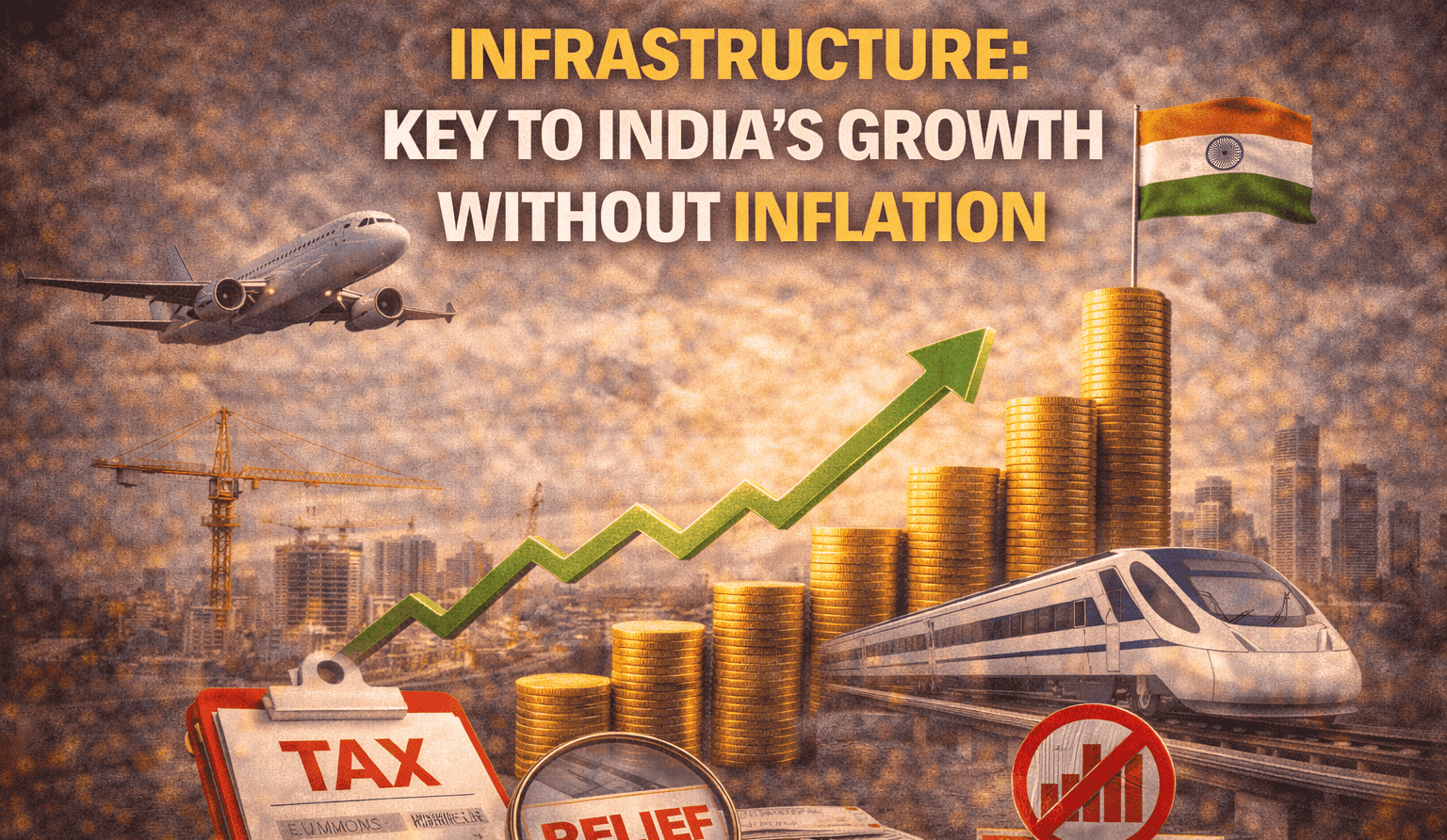
Infrastructure: Key to India’s Growth without Inflation
India’s infrastructure story is undergoing a significant transformation. Over the years, the focus has shifted from merely building at a fast pace to ensuring that these assets perform efficiently. With increased government capital expenditure from around 2% of GDP to over 3% in recent budgets, the commitment to strengthening infrastructure is clear, facilitating sustainable economic growth.
As India targets long-term growth rates of 6-7% while managing inflation, infrastructure is emerging as a vital element in improving supply-side dynamics rather than just a short-term stimulus. Post-COVID, the government has consistently reinforced this vision, providing a stable environment that encourages private investment and boosts market confidence.
To maximize the value from capital expenditure, developing infrastructure that reduces travel times and eases urban congestion is crucial. Such improvements can lead to significant cost reductions across the economy. A well-planned infrastructure investment strategy will ensure that strong growth can be achieved alongside low inflation.
A major focus is now on managing existing assets. India has built an impressive network, including over 1.4 lakh km of national highways, positioning it among the top three countries globally. Targeted investments that enhance safety and capacity can yield substantial economic returns without straining public finances.
Public-private partnerships (PPPs) will be essential in this evolution. These partnerships help blend private capital and expertise with public needs, effectively managing infrastructure throughout its lifecycle. India has valuable experience with PPPs in sectors like roads and airports, contributing significantly to total infrastructure investment.
Moreover, PPPs can improve asset management and allow the government to focus on quality service delivery rather than just asset creation. The National Monetisation Pipeline 2.0 is particularly important, as it offers a multi-year view of assets, encouraging monetization as a part of public capital management.
With NMP 2.0, India can broaden its investor base, attracting long-term domestic and global institutions. This initiative will showcase India’s vision for asset monetization, enabling these institutions to formulate long-term investment strategies.
Mechanisms such as Toll-Operate-Transfer and Infrastructure Investment Trusts are already proving effective in attracting private capital. Emerging models like Public InvITs are set to enhance retail investor participation in India’s infrastructure growth story.
In conclusion, India’s infrastructure agenda is transitioning towards a balanced model that prioritizes productivity and efficient asset management. With continued policy support and improved execution frameworks, infrastructure can effectively contribute to high growth and low inflation in the years to come.







