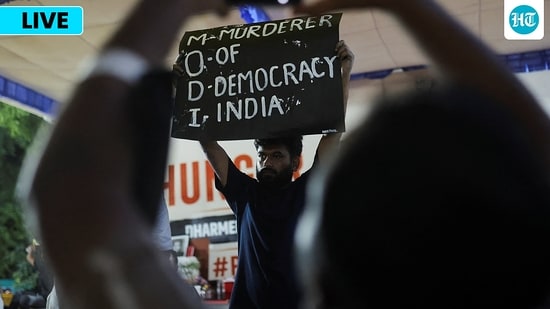
Mamata Banerjee's Kolkata Protest: TMC's Fight for Justice
Mamata Banerjee's recent protest in Kolkata has become a focal point of political discourse in West Bengal. As the head of the Trinamool Congress (TMC) and a former Chief Minister, Banerjee is voicing strong concerns over the alleged political violence that has plagued her party. This protest was initiated after a series of attacks on TMC leaders, notably her nephew, Abhishek Banerjee, who claimed he was assaulted during a visit to areas affected by post-election violence.
The backdrop to this protest is the growing tension between the TMC and the ruling Bharatiya Janata Party (BJP). Banerjee has accused the BJP of using their power and resources to intimidate her party members and manipulate political allegiances. She described the current climate as one where ordinary citizens and small traders are living in fear, particularly due to the ongoing eviction drives targeting hawkers without proper rehabilitation.
Banerjee's determination to proceed with the protest, despite police denying her permission, underscores her commitment to standing by her party's workers. She boldly declared that if she is prevented from protesting in one location, she would continue wherever she is stopped, even stating she is prepared to be arrested. This defiance reflects a larger narrative of resistance against perceived authoritarianism.
The TMC claims that since the assembly elections, there have been multiple instances of violence against its workers, with Banerjee citing that 12 TMC workers have lost their lives and thousands have been arrested or forced to flee. Such alarming figures exacerbate the already tense political atmosphere.
Banerjee's protest also comes at a time when the BJP is firmly positioned in power, having won a significant victory in the recent assembly elections. The BJP has criticized the TMC's actions, questioning the legitimacy of their protests and suggesting that the incidents of violence are exaggerated. BJP leaders have claimed that the entire situation has been orchestrated by the TMC to garner sympathy and bolster demands for increased security for its leaders.
This ongoing political struggle in West Bengal signals a critical juncture for the TMC as it seeks to reclaim its influence and address the challenges posed by the BJP. Banerjee’s assertion that the TMC will emerge stronger from these trials indicates her resilience and commitment to her party’s cause. As the situation develops, the implications for democracy and governance in West Bengal remain a point of significant interest and concern.