Nvidia's AI Chip Revenue Set to Hit $1 Trillion
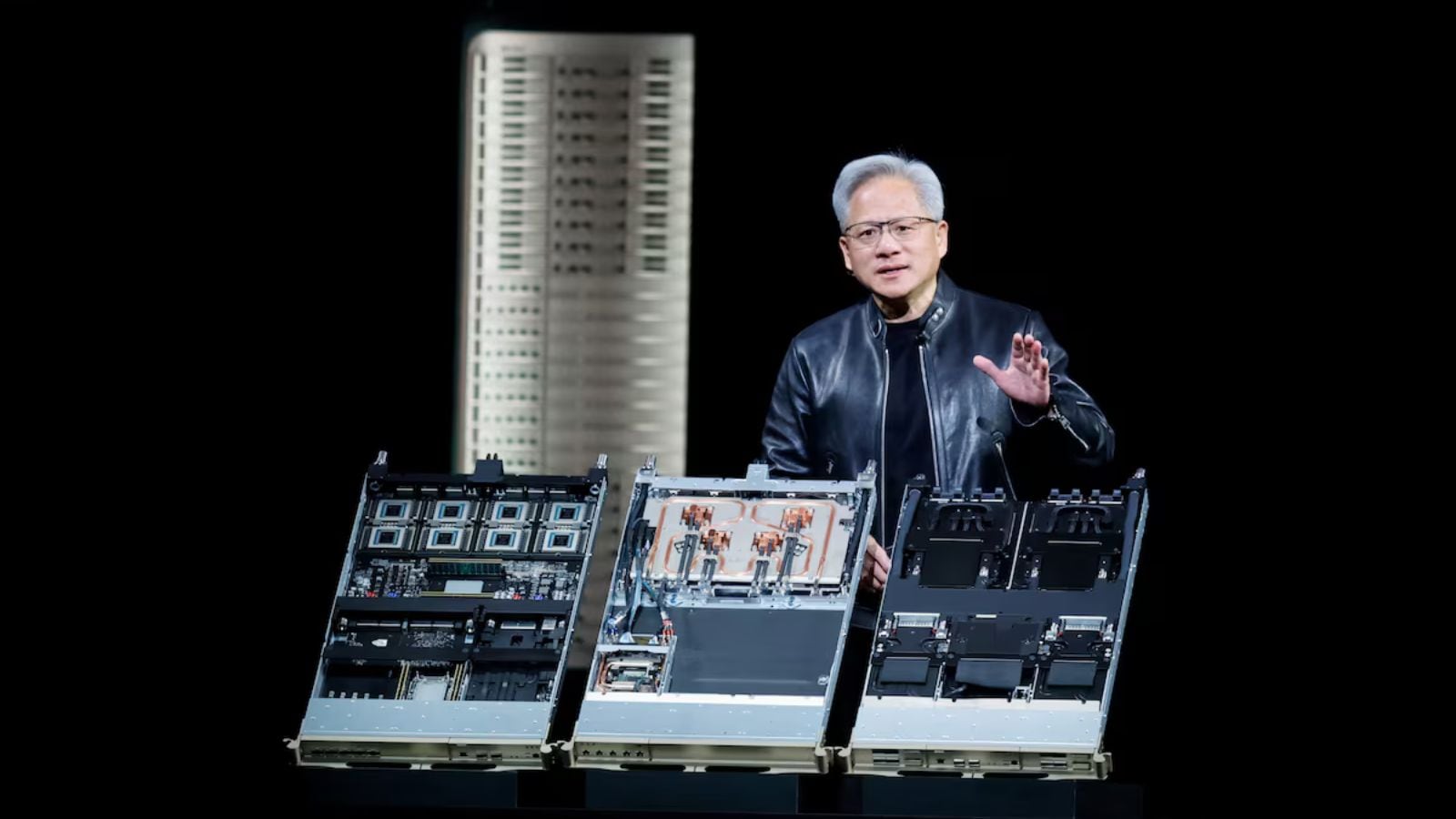
Nvidia is making significant strides in the artificial intelligence (AI) chip market, projecting a remarkable revenue opportunity of $1 trillion by 2027. At its annual developer conference, CEO Jensen Huang unveiled a new central processor and an AI system, showcasing Nvidia's commitment to competing aggressively in real-time AI processing. This marks a strategic shift to enhance the company’s position in inference computing—an area where they face increasing competition from central processing units and other custom processors.
Huang emphasized the importance of inference, which is the process of AI systems answering queries in real-time. He noted that the demand for such capabilities is on the rise, indicating a robust market for Nvidia's infrastructure. Although Nvidia has been the leader in training AI models, the shift towards real-time applications marks a crucial evolution in the industry. Investors had previously expressed doubts about Nvidia's growth trajectory; however, Huang's positive forecast seems to alleviate some concerns.
The revenue outlook has significantly increased from $500 billion to $1 trillion since Nvidia's last earnings call in February. This optimistic prediction was met with a brief rise in Nvidia's stock, reflecting investor confidence in the company's strategic direction. Analysts have highlighted that Huang's vision solidifies Nvidia's leadership in the AI chip market while the overall industry transitions into large-scale deployments beyond initial experiments.
Huang explained that Nvidia's approach to inference will involve two distinct steps. The first step, termed “prefill,” will be handled by Nvidia’s new Vera Rubin chips. This process involves converting user requests from natural language into “tokens” that AI systems can process. The second step, “decode,” will utilize Groq’s new chips to deliver the final answers to users. This two-step process is designed to streamline how AI systems interact with users.
As companies like OpenAI and Meta invest heavily in AI, they are shifting their focus from training to serving millions of users. This transition is also driving demand for CPUs, which are increasingly viewed as viable alternatives to Nvidia's graphics processors for deploying AI models. Huang announced that their standalone CPU business is projected to become a multi-billion-dollar sector.
Additionally, Nvidia is targeting the market for autonomous AI agents with its new tool, NemoClaw, which integrates with the OpenClaw platform, enhancing privacy and safety controls. This innovation has generated considerable interest globally, showcasing Nvidia’s commitment to advancing AI technology.
Overall, Nvidia's recent announcements highlight its strategic expansion in the AI space, underscoring its intention to remain at the forefront of the rapidly evolving industry.