
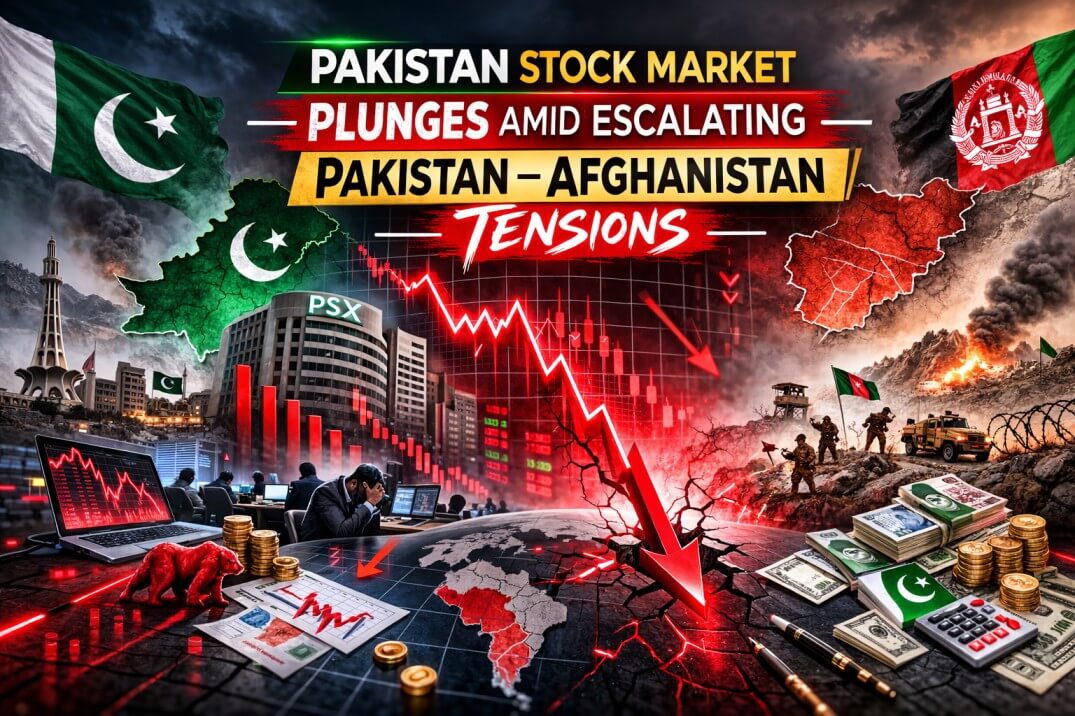
Pakistan Stock Market Plunges Amid Escalating Pakistan–Afghanistan Tensions
Pakistan’s stock market experienced intense volatility on February 27, 2026, as escalating military tensions between Pakistan and Afghanistan rattled investor confidence and triggered widespread selling.
The benchmark KSE-100 index plunged more than 3,000 points intraday, reflecting panic-driven selling and risk-off sentiment across major sectors.
What Triggered the Market Fall?
Investor sentiment weakened following reports of cross-border military escalation.
Pakistan conducted air operations targeting militant bases near the Afghan border, while Afghan authorities condemned the strikes as violations of sovereignty. Reports of cross-border firing and retaliatory military responses heightened fears of a broader conflict.
Geopolitical tensions typically prompt investors to reduce exposure to equities and shift toward safer assets, causing sudden market declines.
Market Snapshot
Intraday (9:20 AM)
Index: 165,813
Fall: ~3,079 points (-1.82%)
Closing Level
Closed at: 168,062
Net Loss: 831 points (-0.49%)
Sectors Under Heavy Selling Pressure
Selling was observed across key sectors:
Commercial banks
Oil & gas exploration
Cement
Fertilizers
Automobile assemblers
Power generation & refineries
Large-cap stocks in banking and energy contributed significantly to the index decline.
Partial Recovery Before Close
Markets recovered from deeper losses in afternoon trading due to:
No immediate escalation headlines
Institutional buying at lower levels
Short covering by traders
Bargain hunting in blue-chip stocks
Experts note that geopolitical shocks often trigger knee-jerk selling followed by technical rebounds.
Weak Trend Continues
The decline marks:
The fifth consecutive negative week
A monthly drop exceeding 16,000 points
Continued foreign investor outflows
Weak corporate earnings outlook
Ongoing geopolitical uncertainty
These factors have kept investor sentiment fragile.
Economic & Investment Impact
If tensions persist, analysts warn of broader financial consequences:
Delay in IPO activity
Reduced foreign investment inflows
Pressure on currency stability
Rising defense and fiscal burdens
Increased sovereign risk perception
Regional instability historically impacts investor confidence and capital flows.
What Lies Ahead?
Market direction will depend on:
Further military escalation or de-escalation
Diplomatic developments
Foreign investor participation
Currency movement and inflation outlook
Regional geopolitical stability
Any escalation could trigger renewed selling pressure when markets reopen.


