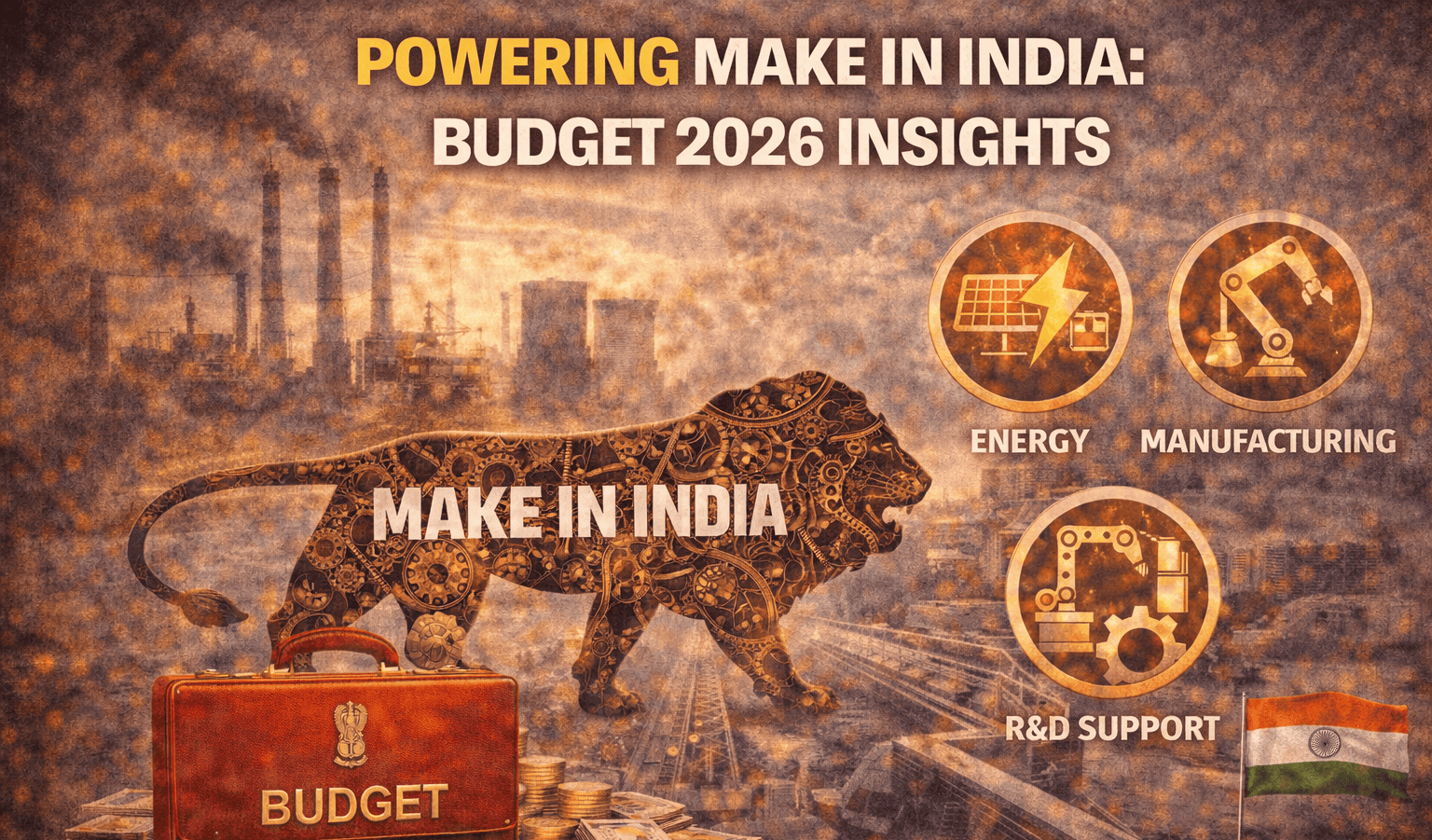
Powering Make in India: Budget 2026 Insights
India’s manufacturing sector is witnessing a remarkable growth trajectory, becoming a vital component of the economy. With a manufacturing output exceeding $450 billion, the country is positioning itself as a formidable player in global value chains. Despite this growth, the sector’s contribution to GDP has remained relatively stagnant at around 15-17%. This presents a significant challenge for the upcoming Budget 2026–27, which must implement policies that enhance competitiveness and cost efficiency in domestic manufacturing.
The Production-Linked Incentive (PLI) scheme has emerged as a key driver of growth, with the government allocating approximately ₹2.9 lakh crore across 20 sectors. This initiative has attracted substantial private investment, resulting in a remarkable increase in output and the creation of nearly 12 lakh jobs. The electronics sector has particularly benefited, with production expanding sixfold in a decade, making India the world’s second-largest mobile phone manufacturer.
To build on this momentum, the Budget can extend the PLI tenures, broaden the list of eligible products, and introduce new schemes in emerging sectors such as electric vehicles, solar energy, and semiconductor manufacturing. This proactive approach can enhance self-sufficiency and resilience in the face of global challenges, ensuring that India remains competitive in the international market.
Additionally, India’s strategic tariff policies have facilitated efficient scaling of industries. By incrementally raising duties on finished goods and components, the government has created a protective environment for domestic manufacturers while also leveling the playing field for foreign competitors. This “glide path” approach has proven effective in various sectors, including automotive and solar modules.
Quality measures have also evolved, helping to maintain high standards and prevent the influx of subpar products. The increase in mandatory Indian standards under Quality Control Orders (QCOs) from 80+ in 2019 to over 750 today reflects a commitment to quality in manufacturing. A proposed multi-year standards roadmap and increased testing facilities could further enhance India's ability to meet global quality standards.
Moreover, indirect tax reforms have significantly improved the ease of doing business. The upcoming “next-gen” GST reforms aim to simplify tax structures and expand the tax base, fostering a more conducive environment for businesses. The Budget can further improve customs processes through digital trade facilitation, reducing delays and paperwork burdens for importers and exporters.
India’s focus on enhancing manufacturing capabilities is evident through initiatives like the National Manufacturing Mission and the National Critical Minerals Mission. By boosting research and development, expanding Skill India programs, and strengthening industrial infrastructure, the Budget 2026–27 can catalyze this transition towards a robust manufacturing ecosystem.
In conclusion, as India aligns its regulatory frameworks to better support industry needs, the nation is poised to strengthen its position in global supply chains. With manufacturing on the rise, record-high exports, and increased foreign investment, the upcoming Budget can propel the Make in India initiative to new heights, fostering scalability, quality, and global competitiveness.