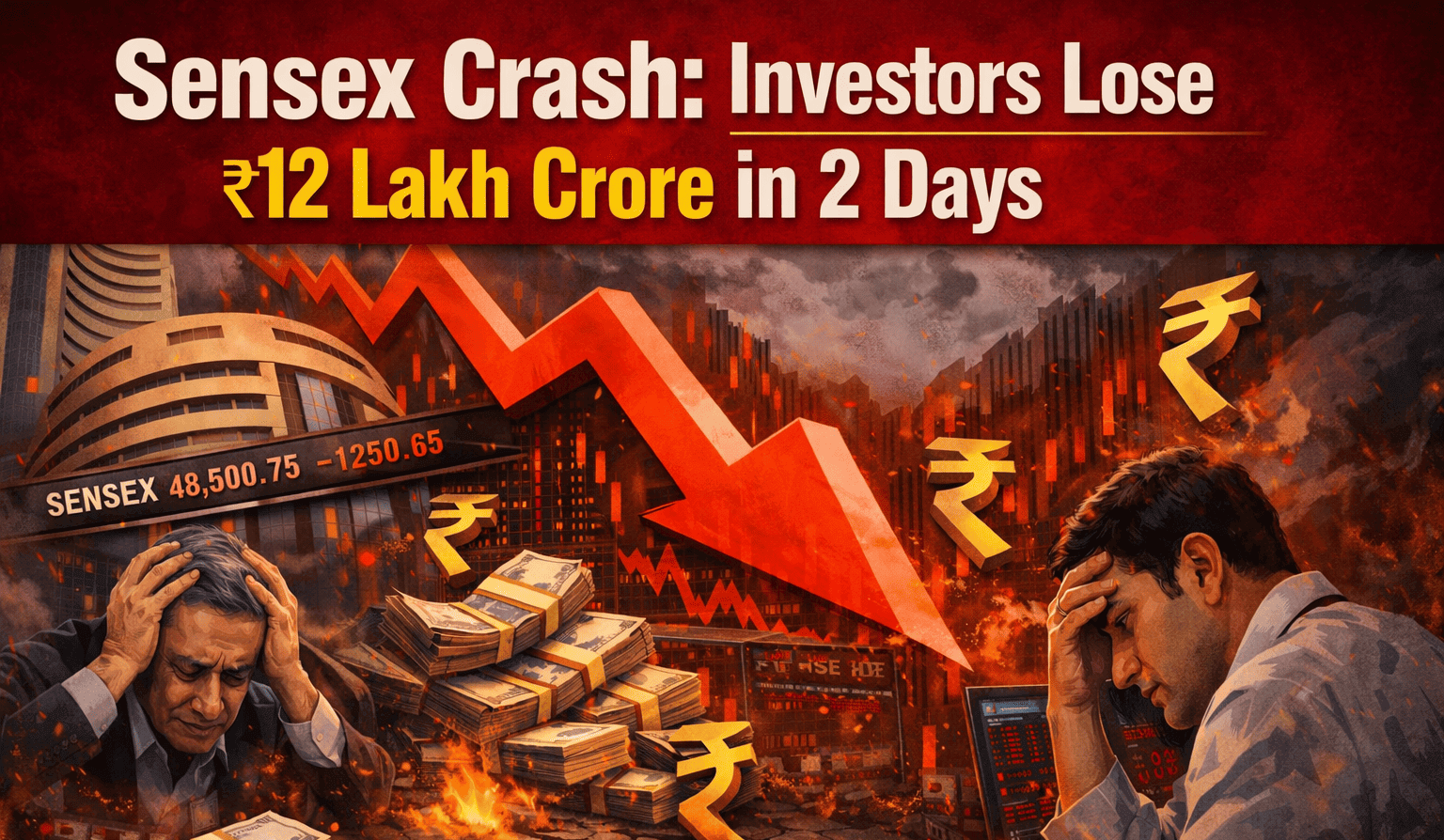
Sensex Crash: Investors Lose ₹12 Lakh Crore in 2 Days
The Indian stock market is experiencing a significant downturn, causing widespread concern among investors. Over the past two days, the Sensex has dropped more than 1,400 points, resulting in a staggering loss of ₹12 lakh crore in market capitalization. Investors are worried about the current geopolitical climate, particularly following US President Donald Trump's aggressive trade policies and the uncertain outcomes of Q3 earnings reports.
On January 20, the Sensex fell by over 1,200 points to an intraday low of 82,010.58, while the Nifty 50 index breached the 25,200 mark. By the end of the day, the Sensex closed at 82,180.47, down 1.28%, with the Nifty ending at 25,232.50, a loss of 1.38%. The BSE Midcap index saw a decline of 2.52%, and the Smallcap indices fell by 2.74%, indicating a broad-based sell-off.
Market volatility is expected to persist, as indicated by the India VIX, which surged nearly 8%. Among the affected sectors, Nifty Realty plummeted over 5%, and Consumer Durables dropped by 3%. Other sectors such as Auto, IT, Metal, and Pharma also experienced declines of around 2% each.
Several factors are contributing to this downward trend. Firstly, geopolitical tensions, particularly related to US tariffs on European goods, are causing uncertainty. Experts believe that the market will remain volatile until clarity emerges regarding the US-Europe standoff. Secondly, Q3 earnings have been mixed, with no significant positive surprises to boost market sentiment.
Foreign institutional investors (FIIs) have been selling off Indian stocks heavily, with reports indicating sales exceeding ₹29,000 crore in January alone. This selling pressure is caused by uncertainties surrounding trade deals and a mismatch in earnings expectations. Many investors are shifting towards safer assets like gold, which have seen record-breaking rallies amid these uncertainties.
As the Union Budget approaches on February 1, the market sentiment remains cautious. Investors are hopeful for measures that will stimulate economic growth and job creation. However, there is also concern that a focus on fiscal consolidation may limit capital expenditure by the government, further impacting market confidence.
In conclusion, the Indian stock market is navigating through turbulent waters, influenced by both domestic and international factors. Investors are advised to stay informed and consider expert guidance as conditions continue to evolve.