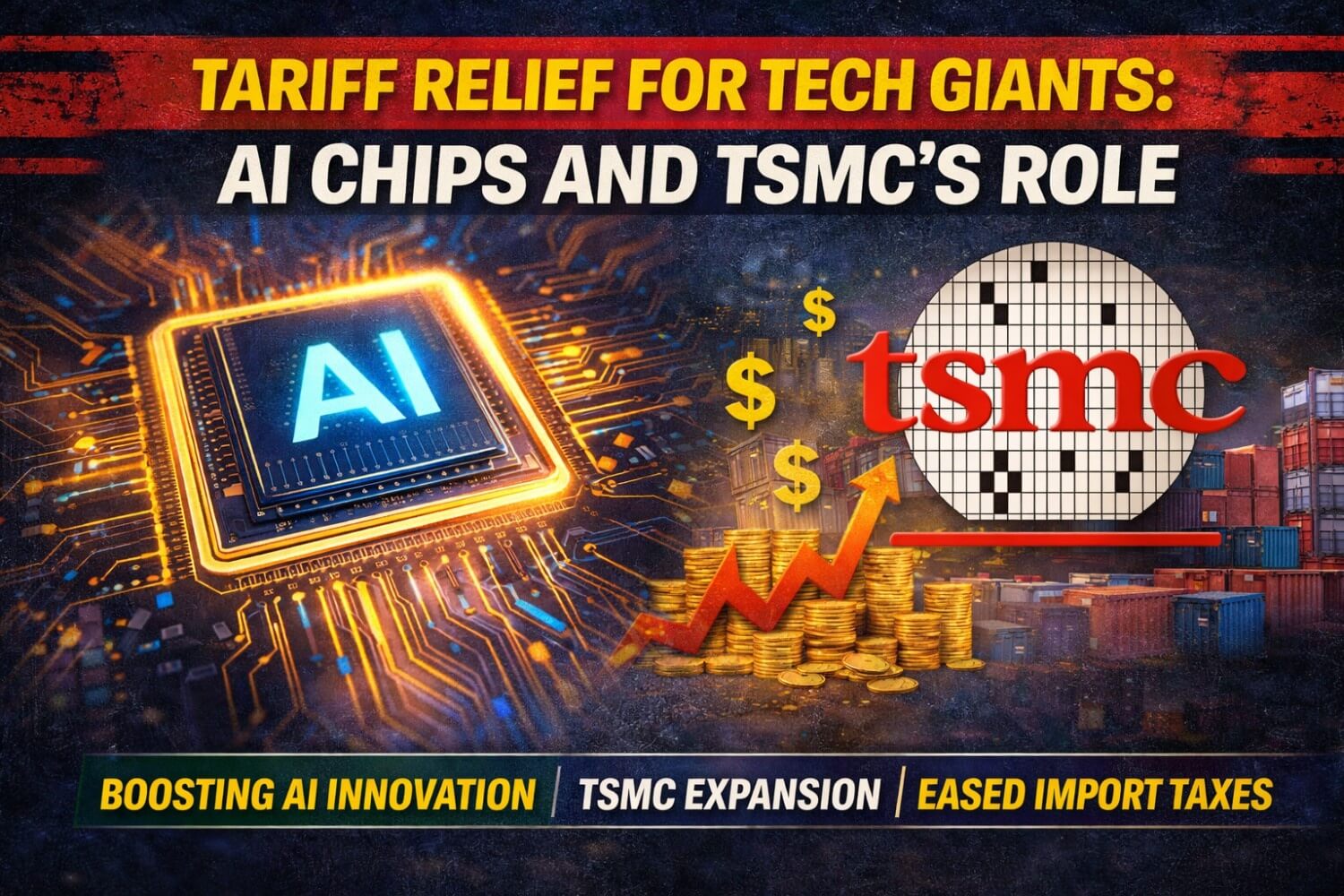
Tariff Relief for Tech Giants: AI Chips and TSMC's Role
The Trump administration is considering a significant policy shift that may provide major tech companies like Amazon, Google, and Microsoft with tariff exemptions on chips used in their AI data centers. This move is largely in response to the growing demand for artificial intelligence technologies and aims to strengthen the domestic semiconductor industry in the United States.
According to a report from the Financial Times, the US Department of Commerce plans to formulate these tariff reductions based on investments made by Taiwan Semiconductor Manufacturing Company (TSMC), which has pledged to invest a staggering $165 billion to establish factories in the US. This investment is seen as crucial for enhancing the US's semiconductor capabilities amid global competition.
The proposed plan includes cutting tariffs on imports from Taiwan down to 15% and allowing Taiwanese chip manufacturers to import chips tariff-free during the construction of their new plants in the US. This could potentially allow TSMC to import up to 2.5 times their planned capacity without tariffs, which is aimed at encouraging the company to relocate more of its production to the US.
However, not all aspects of this policy are set in stone. Reports indicate that the plans are still under discussion and have not yet been finalized or signed by President Trump. Officials are closely monitoring the situation to ensure that these tariff exemptions do not turn into a giveaway to TSMC.
Currently, only a limited number of chips that are imported into the US and later exported to China are subject to a 25% tariff imposed by the Trump administration. This has raised concerns about national security but also puts pressure on companies like AMD and Nvidia.
The administration's ambitious goal is to shift around 40% of Taiwan's semiconductor production capacity to the US, a target that Taiwanese negotiators consider nearly impossible. Taiwanese officials have expressed clearly that relocating their extensive semiconductor ecosystem is not feasible, as it has been developed over decades and is deeply rooted in their industrial landscape.
In conclusion, while the potential tariff relief for major tech companies could strengthen the US semiconductor industry, the challenges of relocating production from Taiwan remain significant. The unfolding situation will be closely watched as it impacts not only the tech giants but also the broader international semiconductor landscape.