
UAE Exits OPEC & OPEC+: What It Means for Oil Prices, Global Supply, and India
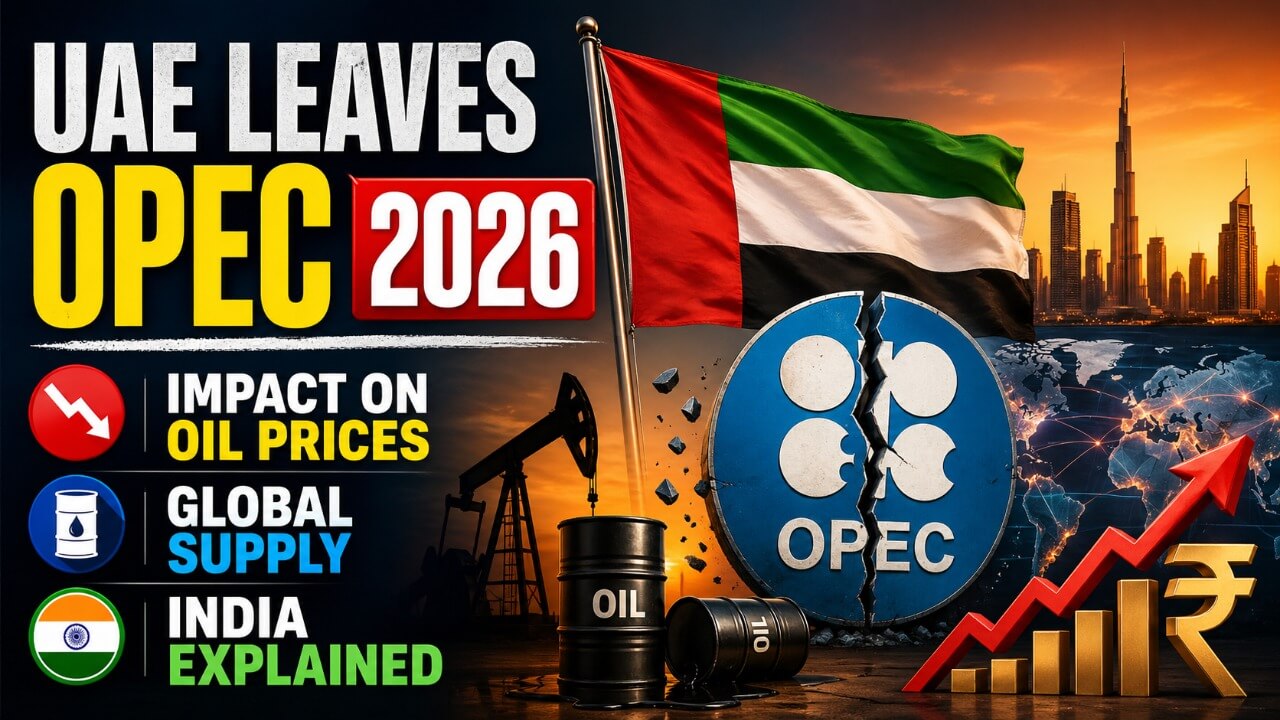
The exit of the United Arab Emirates from OPEC and OPEC+ marks one of the most important shifts in the global oil landscape in recent years.
Historically, OPEC has played a critical role in stabilizing oil prices by coordinating production levels among member countries. However, internal disagreements—especially regarding production quotas—have increasingly challenged this unity.
The UAE, which has invested heavily in expanding its oil production capacity, has been vocal about wanting higher output limits. Its exit now allows it to produce oil at levels aligned with its national interests rather than collective agreements.
From a market perspective, this could lead to increased oil supply, potentially putting downward pressure on global crude prices. However, reduced coordination may also introduce higher volatility, making the market less predictable.
For India, this development presents both opportunities and risks. Lower oil prices could benefit the economy by reducing import costs and controlling inflation. On the other hand, increased volatility and geopolitical uncertainties could create challenges for long-term energy planning.
In the broader context, the UAE’s exit raises questions about the future relevance of OPEC. If more countries begin prioritizing national strategies over collective agreements, the global oil market could move toward a more fragmented and competitive structure.
This story is still developing, and its full impact will unfold over the coming weeks as markets and policymakers react to this major geopolitical shift.


