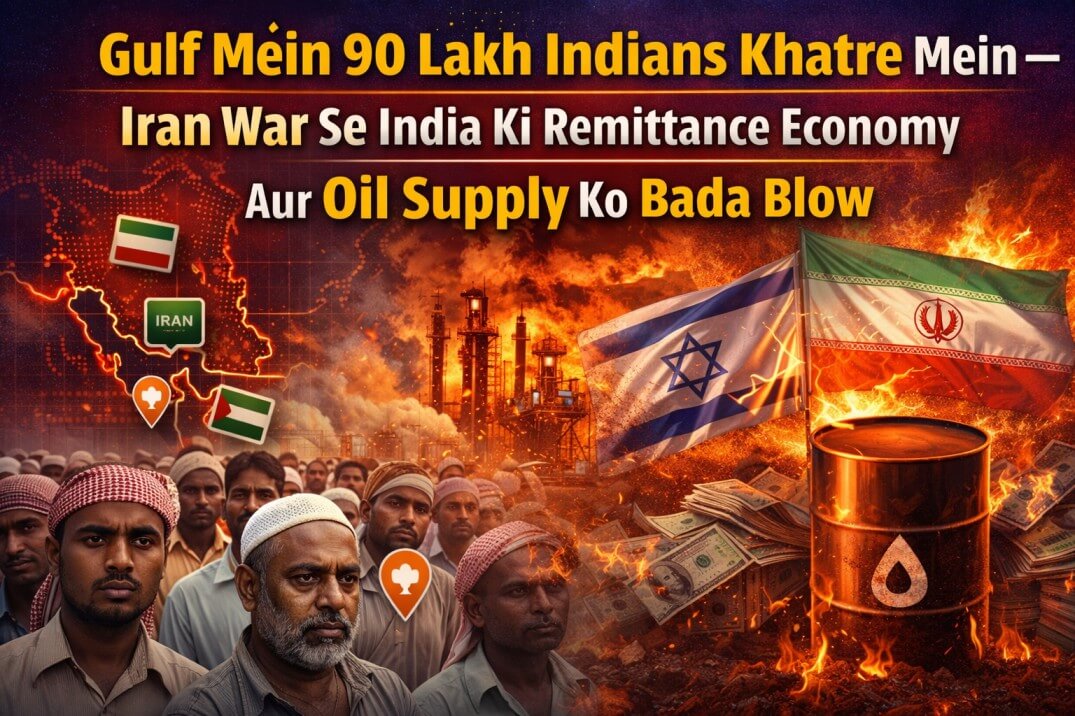
90 Lakh Indian Workers in Gulf at Risk — Iran War Threatens India's ₹12.53 Lakh Crore Remittance Economy and Oil Supply
The 2026 Strait of Hormuz crisis began on February 28, 2026, following joint military strikes by the United States and Israel on Iran, which included the assassination of Iran's supreme leader Ali Khamenei. In response, Iran launched retaliatory missile and drone attacks on Israeli territory and US military bases in Gulf states, while its Islamic Revolutionary Guard Corps (IRGC) issued warnings prohibiting vessel passage through the strait, leading to an effective halt in shipping traffic. Tanker traffic dropped by approximately 70% initially, with over 150 ships anchoring outside the strait to avoid risks. DNA India
For India, the implications of this crisis are enormous. India has deep economic and people-to-people ties with Iran and key Gulf countries such as the UAE, Saudi Arabia, Qatar, Kuwait, and Bahrain. These links span oil supplies, trade, investments, remittances, and millions of Indian workers and students living there. India imports nearly 90% of its crude oil needs, making it highly sensitive to disruptions in West Asia.
The crisis threatens the lives and livelihoods of approximately 90 lakh (9 million) Indians living and working across Gulf countries. With Tehran's retaliation expanding to Dubai, Abu Dhabi, and Bahrain, remittances — a vital source of foreign cash — are seriously threatened, and diaspora communities face direct risk from escalating missile attacks.
On the remittance front, as per RBI data, India received a record high $135.46 billion, roughly Rs 12.53 lakh crore, in remittances in the fiscal year 2024–25. The Gulf region alone accounts for around 38% of India's total remittances, of which nearly half comes from the UAE. International trade expert Ajay Srivastava said that if the war engulfs other nations including the UAE and continues longer, then the situation can turn grim. There are reports of bombings in Dubai and Abu Dhabi — if these continue, the threat of job losses for Indians cannot be ruled out.
The energy chokepoint is equally alarming. Oil prices rose above $79.40 per barrel, after hitting $73 per barrel ahead of the joint US and Israeli attacks. Shipping traffic is down at least 80%, according to maritime intelligence analysts. A senior commander for Iran's Revolutionary Guard said the strait is closed and that it would set any ship trying to pass on fire. Most commercial operators, major oil companies, and insurers have effectively withdrawn from the corridor. Zee News
India imports nearly 88–90% of its crude oil requirements, of which approximately 40–50% — roughly 2.5 to 2.7 million barrels per day — passes through the Strait of Hormuz. A disruption would directly affect supplies from Saudi Arabia, Iraq, Kuwait, and the UAE. If Gulf flows slow, Indian refiners could increase purchases of discounted Russian crude as an alternative supply buffer, though longer shipping routes from the Americas or Africa would raise freight costs significantly.
Shipping costs for oil cargoes transiting Hormuz are reportedly rising sharply — potentially by as much as 50%. For India, whose annual oil import bill runs into tens of billions of dollars, even a modest increase in transit costs could mean billions in additional expenditure, leading to higher retail fuel prices and an increased fiscal burden.
Flames have reached the UAE, India's second-largest electronics export destination after the US. Beyond being an entrepôt for regional trade, Dubai and Abu Dhabi are wealth hubs for the Indian elite. As Iran vows retribution for the killing of Ayatollah Ali Khamenei, both migrant laborers and affluent professionals are on edge.
India's strategic reserves stand at 83–85 days — short of the internationally recommended 90-day buffer. The government is expected to monitor the situation closely and absorb costs through tax adjustments to prevent immediate fuel price hikes. However, a prolonged war could force difficult choices between fiscal discipline and consumer relief.