China's Shenzhou-20 Abandoned: Astronauts Return Safely
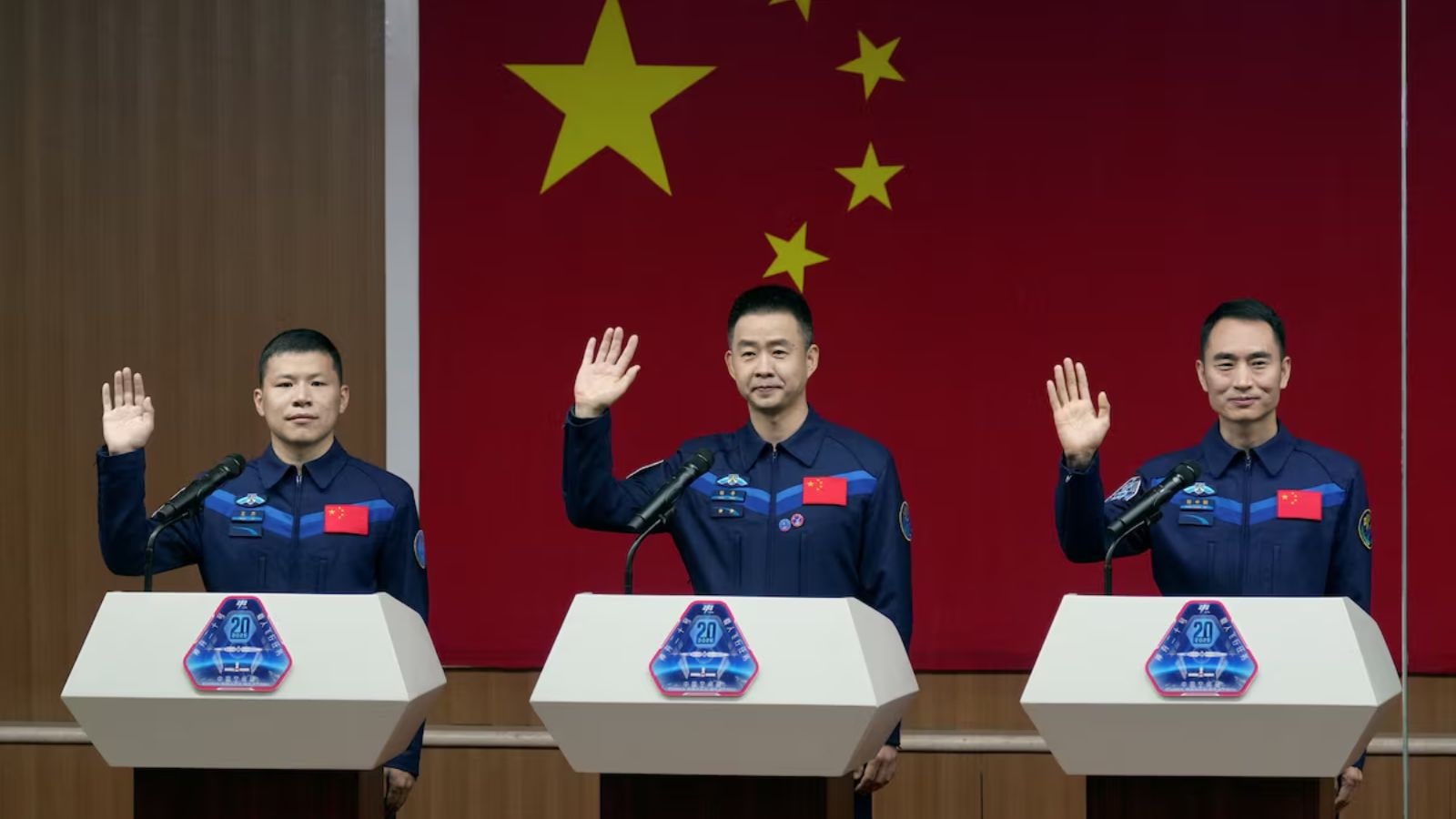
Three Chinese astronauts made a significant return to Earth aboard the Shenzhou-21 after a challenging ordeal at the Tiangong space station. Stranded for over a week, they found themselves in a precarious situation when their original spacecraft, Shenzhou-20, was rendered unsafe due to debris damage. This incident underscores the vulnerabilities in China’s ambitious space program, as they currently lack a backup mechanism for emergencies.
Upon the China Manned Space Agency (CMSA) discovering a window fracture in the Shenzhou-20, they made the decision to abandon the spacecraft at the space station. This left the astronauts, Chen Dong, Chen Zhongrui, and Wang Jie, reliant on the Shenzhou-21, which had initially been scheduled for a longer mission but was repurposed to bring them home. Their return highlights not just their resilience but also raises questions about the safety protocols in place for Chinese astronauts.
Tiangong, known as the "Heavenly Palace," is China's first permanently manned space station. As of now, it is home to three crew members, including Wu Fei, the youngest Chinese astronaut. However, the lack of an operational spacecraft for emergencies puts Tiangong in a unique and potentially dangerous position. This vulnerability has not been openly discussed by China's space authorities or state media, with state broadcaster CCTV focusing instead on the details of the Shenzhou-21's journey back to Earth.
The return of the Shenzhou-20 crew marks a historic achievement, being the first successful implementation of an alternative return procedure in the country’s space station program history. This also set a new record for the longest in-orbit stay for Chinese astronauts. Since 2021, astronauts from China's Shenzhou missions have consistently traveled to Tiangong, making this situation particularly notable.
Before the Shenzhou-20 can be completely removed from orbit, it must be repaired. If not addressed, future missions could be jeopardized, as Tiangong needs to have a docking port available for incoming spacecraft. According to experts, if substantial damage is confirmed, there is a possibility that Shenzhou-20 could be undocked and deorbited over the Pacific Ocean.
In light of these developments, CMSA announced plans for the launch of Shenzhou-22 in the near future. This mission's early deployment may have been influenced by operational insights from Russia's Soyuz program, which has a long history of manned space missions. The situation surrounding Shenzhou-20 serves as a critical lesson for China as they continue to advance in space exploration.