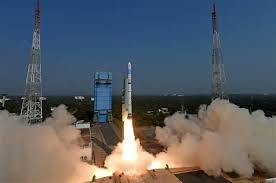
ISRO's SSLV Third Stage Test Success at Sriharikota
ISRO has achieved a remarkable milestone by successfully conducting a static test of the enhanced third stage of the Small Satellite Launch Vehicle (SSLV) at Sriharikota. This test, which was carried out at the Solid Motor Static Test Facility of Satish Dhawan Space Centre, is a part of ISRO's ongoing efforts to bolster India's satellite launch capabilities.
The SSLV is a three-stage all-solid launch vehicle specifically designed for rapid production and quick launch turnaround. This makes it an essential tool for meeting the increasing demands for satellite launches, particularly for small satellites. The recent test validated an upgraded version of Stage 3, known as SS3, which features a carbon-epoxy motor case that significantly reduces the mass of the stage.
By lowering the weight, the improved design enhances the payload performance of the SSLV by an impressive 90 kg. This innovation is expected to make satellite launches more efficient and cost-effective. The new version also introduces advancements in the igniter and nozzle system, enhancing overall system reliability and performance.
The nozzle control system has been upgraded to a fault-tolerant electro-mechanical actuation system, coupled with low-power control electronics. This development is crucial for ensuring the precision and stability needed during launches.
ISRO has also made significant strides in solid motor production facilities this year. New facilities have been commissioned to boost the capacity for realizing solid motors that are critical for the space program. For instance, Solid Motor production facilities were established in Sriharikota, and a second production line for Ammonium Perchlorate was set up at Alwaye to double the production capacity of this essential ingredient.
Moreover, a state-of-the-art 10-tonne vertical mixer for the solid motor production line was introduced at SDSC, making it the largest solid propellant mixing equipment in the world. The achievements in the Solid Motor Production and Static Testing (SMPST) facilities are paving the way for future launches, including those developed by Indian space startups.
This successful static test is a testament to ISRO's commitment to advancing India's position in the global space industry and enhancing its capabilities for satellite launches, ensuring that the nation is well-prepared for future challenges and opportunities in space exploration.