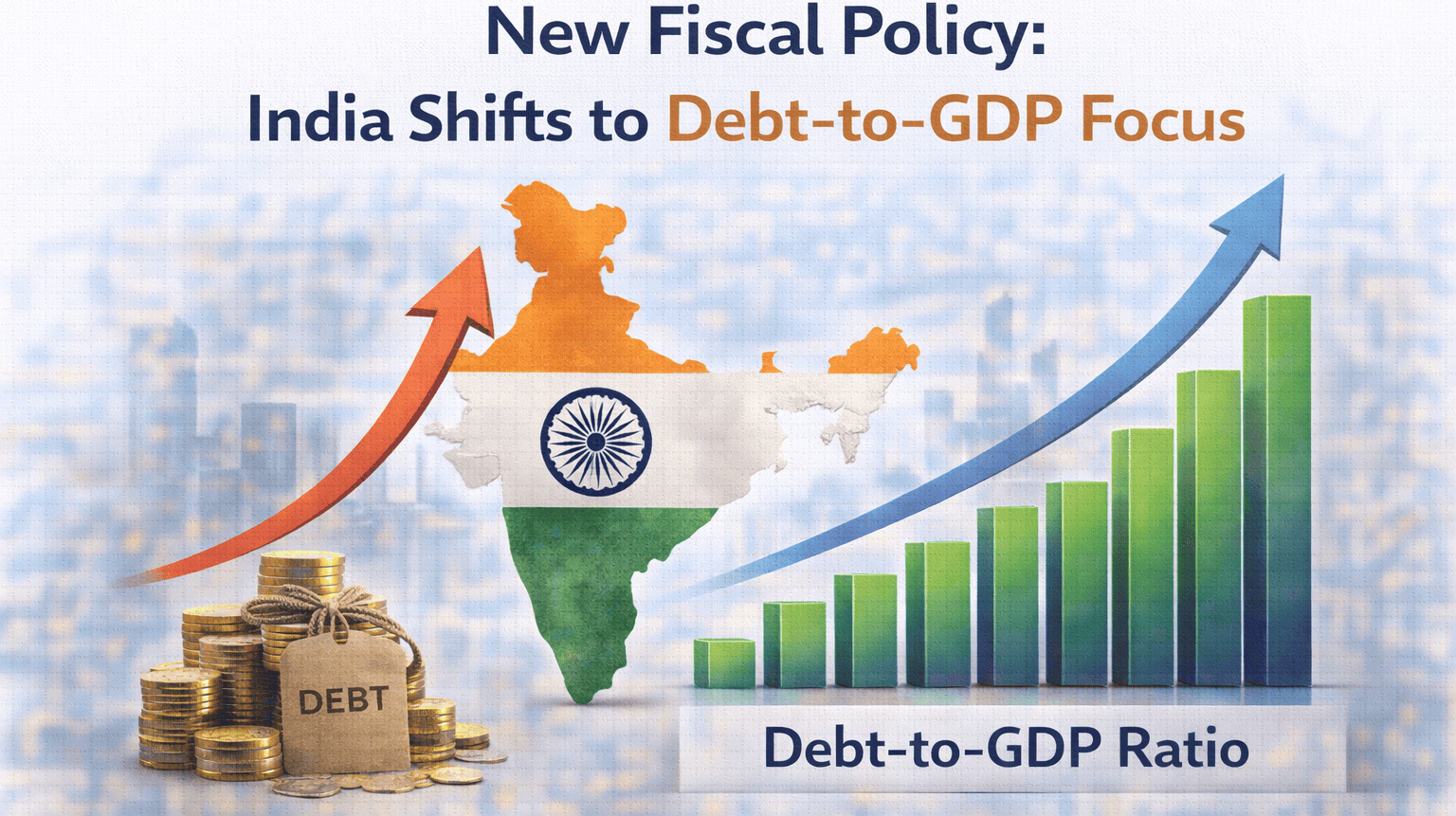
New Fiscal Policy: India Shifts to Debt-to-GDP Focus
India is on the verge of a significant shift in its fiscal policy, moving from focusing on fiscal deficits to a debt-to-GDP ratio as the primary anchor for its budgetary framework. This change comes as Finance Minister Nirmala Sitharaman prepares to present her ninth consecutive Budget, marking a pivotal moment in India's economic strategy.
The new fiscal guidance aims to provide the government with greater flexibility in enhancing development spending. This shift aligns India with global practices where many nations anchor their fiscal policies to debt levels, allowing them to respond more effectively to economic challenges while ensuring long-term sustainability.
As per the government's projections, the debt-to-GDP ratio is expected to decline to around 50% by March 2031 from an estimated 56.1% in March 2026. Economists anticipate that the Budget will target a debt-to-GDP ratio of about 55% for FY27. This gradual approach will facilitate a more manageable pace of fiscal consolidation, particularly after the disruptions caused by the Covid-19 pandemic.
Experts, including UBS Securities India, argue that this approach will help rebuild fiscal buffers and provide policymakers the necessary space for growth-enhancing expenditures. The debt-to-GDP ratio will be closely tied to nominal GDP growth, government borrowing, and repayment obligations, making the management of these factors crucial for fiscal health.
Additionally, the role of state governments in managing public finances will come under greater scrutiny. The Reserve Bank of India has called for states to also target debt reductions, echoing the Centre’s approach. As states contribute significantly to overall government debt, a cooperative strategy between the Centre and states will be vital for achieving sustainable fiscal health.
Moreover, the 16th Finance Commission's recommendations, which will be effective from FY26 to FY31, are expected to provide clearer guidelines regarding tax devolution and revenue sharing. This could lead to a more structured approach to managing state debts and aligning them with realistic growth assumptions.
As the Centre prepares to meet its commitment to keep the fiscal deficit below 4.5% of GDP by FY26, the implications of this new debt-to-GDP framework are substantial. While it offers some financial breathing room, challenges from recent tax cuts and the overall economic environment may still impact deficit projections. Policymakers will need to maintain a cautious outlook as they navigate these complexities in the coming years.