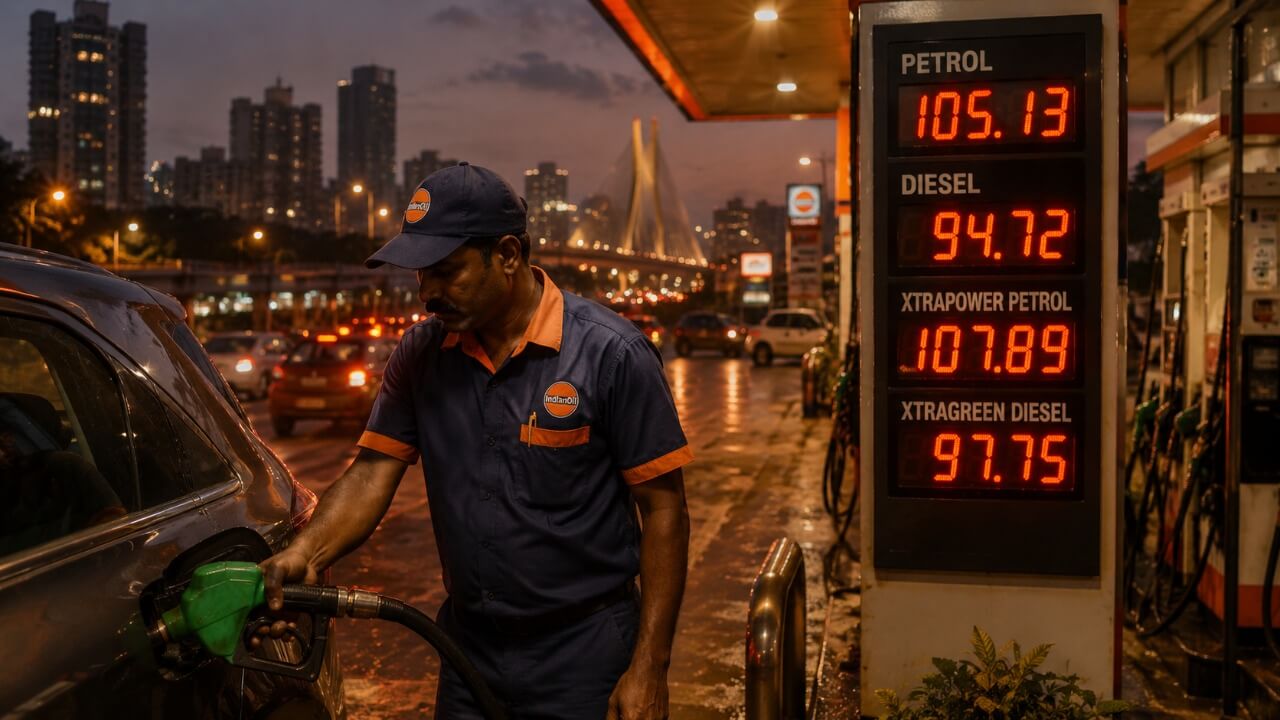
Petrol-Diesel Price Hike: First Rise in 4 Years, ₹3 Per Litre Increase Hits India
India's three major state-owned oil marketing companies (OMCs), Indian Oil Corporation (IOC), Bharat Petroleum (BPCL), and Hindustan Petroleum (HPCL), collectively increased retail prices of petrol and diesel by ₹3 per litre each on May 15, 2026. This marks the end of the longest period of retail fuel price stability in India's history, with no upward revision for 49 consecutive months.
New City-Wise Fuel Rates (Effective May 15, 2026)
Delhi: Petrol ₹97.77 | Diesel ₹90.67 Mumbai: Petrol ₹106.68 | Diesel ₹93.26 (approx.) Kolkata: Petrol ₹108.74 | Diesel ₹93.xx Chennai: Petrol ₹103.67 | Diesel ₹90.xx Jaipur: Petrol ₹107.99 | Diesel ₹93.26
CNG prices have also been raised by ₹2 per litre in major cities.
Why Did the Hike Happen Now?
The trigger is the sharp rise in global crude oil prices following the West Asia war. India's crude oil import basket, which averaged $69 per barrel in February 2026, surged to $113-114 per barrel in subsequent weeks, a jump of over 50 percent. The three PSU oil companies absorbed these losses for close to 11 weeks before the increase became financially unavoidable. Oil ministry officials stated that OMCs were losing approximately ₹100 per litre on diesel and ₹20 per litre on petrol at pre-hike prices.
The hike also came exactly 16 days after assembly elections concluded in Assam, Kerala, Tamil Nadu, and West Bengal, with fuel prices held steady through the entire polling period despite surging international crude rates.
What Analysts Are Saying
Despite the ₹3 hike, ICRA estimates the three PSUs are still incurring a combined daily loss of around ₹500 crore on the sale of auto fuels and domestic LPG. Industry experts say the actual price correction needed to break even at current crude rates would be closer to ₹30 per litre, meaning further hikes cannot be ruled out.
Jateen Trivedi of LKP Securities noted that the hike indicates the government's intent to manage fuel subsidies and protect forex reserves. He also said the move could accelerate adoption of electric vehicles among cost-sensitive urban consumers.
Inflation Impact
According to economic studies, fuel price shocks in India have significant second-round inflationary effects through transport and agriculture input costs. The ₹3 hike is expected to reflect across freight rates, household expenses, and factory prices by July-August 2026. The Opposition, including the Congress, AAP, and the Samajwadi Party, has strongly criticised the move, calling it anti-farmer and anti-poor.